Low Volume CNC Machining: The 2026 Practical Guide
You're staring at a quote that looks simple on paper, then turns messy as soon as you try to approve it. Fifty aluminum brackets, ±0.005 in tolerance, anodized, needed in three weeks for a pilot build, and suddenly you're being asked to choose between speed, cost, and a process you may not fully trust.
That's the core low-volume CNC machining problem. Not "what is it," but when does CNC stop being the economical choice, and what design choices shift that crossover point for your part.
Table of Contents
What Low Volume CNC Machining Means- Why buyers keep choosing it
Processes That Power Low Volume CNC Machining- 3-axis, 4-axis, and 5-axis milling
Cost and Lead Time Drivers You Can Control- What you can control in the RFQ
When CNC Beats Injection Molding, Vacuum Casting, and 3D Printing- The crossover question
DFM Rules That Protect Budget and Lead Time- Geometry that machines cleanly
Supplier Selection and Quality Control Checklist- What to verify before award
Practical Use Cases and a Short Decision Framework- A simple crossover rule
The Real Decision Behind Low Volume CNC Machining
A hardware lead gets the same kind of RFQ every week. 50 aluminum brackets, tight tolerance, finish requirement, and a deadline that doesn't leave room for supplier guesswork. The wrong reaction is to ask whether the job fits some textbook definition of low volume. The right reaction is to decide whether CNC is the correct economic tool for that exact part, that exact revision state, and that exact launch window.
Start with the part, not the process
Low-volume CNC machining is not a category you memorize, it's a sourcing decision you apply. The economics change based on geometry, tolerance, material, setup count, and how likely the design is to change before the next build. A part that looks expensive at 20 units may be perfectly rational at 50 if it needs production-grade material and a revision-safe workflow.
Practical rule: if the part is still changing, CNC is usually the safer bet. If the geometry is locked and the run will repeat, start comparing tooling-based processes earlier.
That distinction matters because the rest of your sourcing decision follows from it. You need to know which process family fits the geometry, how much setup and inspection the part will force, and where the crossover to molding or casting sits. You also need a supplier who can tell you what drives cost first, instead of hiding behind a single number and hoping you won't ask questions later.

The practical takeaway is simple. Treat CNC as the default option for prototype-to-production transition work, then force every quote to justify itself against the part's geometry, tolerance class, and volume curve. That is how procurement avoids paying for the wrong process because the RFQ was written too loosely.
What Low Volume CNC Machining Means
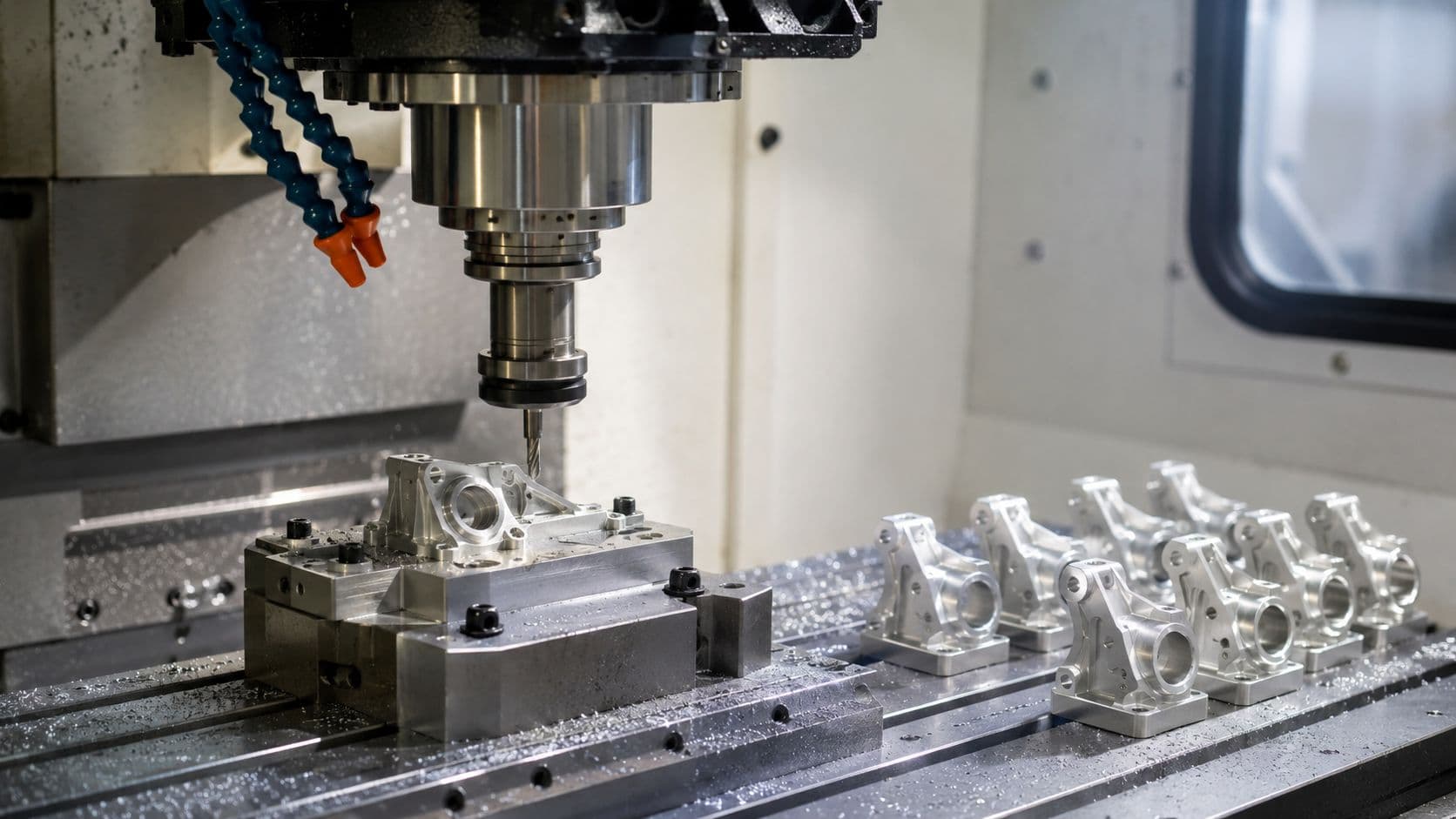
Low-volume CNC machining means programmed toolpaths instead of hard tooling. In practice, it usually covers roughly 10 to 1,000 units, with a common working sweet spot at 10 to 250 pieces where setup costs are spread sensibly without forcing you into mold or die economics. Haizol's 2026 China machining dataset showed 63.3% of demand came from orders of 50 units or fewer, 43.3% of RFQs were for prototype quantities of 1 to 5 units, and the median MOQ across 60 RFQs was 10 units, with the 25th percentile at 2 units. Haizol's 2026 China machining report makes the point plainly, this is mainstream short-run sourcing, not an edge case.
Why buyers keep choosing it
The attraction is revision agility. A CNC part can be reprogrammed when a drawing changes, so you are not paying to remake a mold or die every time the CAD file changes. That keeps it useful for NPI, first-article validation, bridge production, and small-batch repeat builds.
The sourcing reality matters just as much as the engineering logic. Short-run buyers are not placing large runs and hoping suppliers will tolerate them. They are buying the exact quantity needed to test, validate, and release the next stage without carrying extra inventory or tooling risk. That is why so many RFQs in this segment are for tiny batches, then a much smaller share of buyers move into larger short runs once the design is settled.
Why it's mainstream now
The market has moved beyond “prototype only” thinking. Buyers now use CNC for production-grade parts in the same volume band where they used to accept visual mockups or temporary substitutions. A sourcing guide from Haizol defines low-volume CNC as roughly 10 to 1,000 units, and the practical sweet spot at 10 to 250 pieces fits the bridge between prototype and scale. Haizol's low-volume CNC guide shows why the segment is built around fast iteration and no-tooling flexibility rather than a single fixed order size.
Practical rule: if the part has to behave like the final product, CNC is the default short-run choice. If it only has to look right, compare other processes before approving metal.
For procurement and design leads, that means low-volume CNC is not a special case. It is the baseline option whenever you need functional parts before you are ready to commit to dedicated tooling.
Processes That Power Low Volume CNC Machining
The process you should buy is the one that matches the geometry. Axis count is not a prestige feature, it's a setup and tolerance decision. If you choose the wrong one, you pay for extra fixturing, extra inspection, and extra lead time.
3-axis, 4-axis, and 5-axis milling
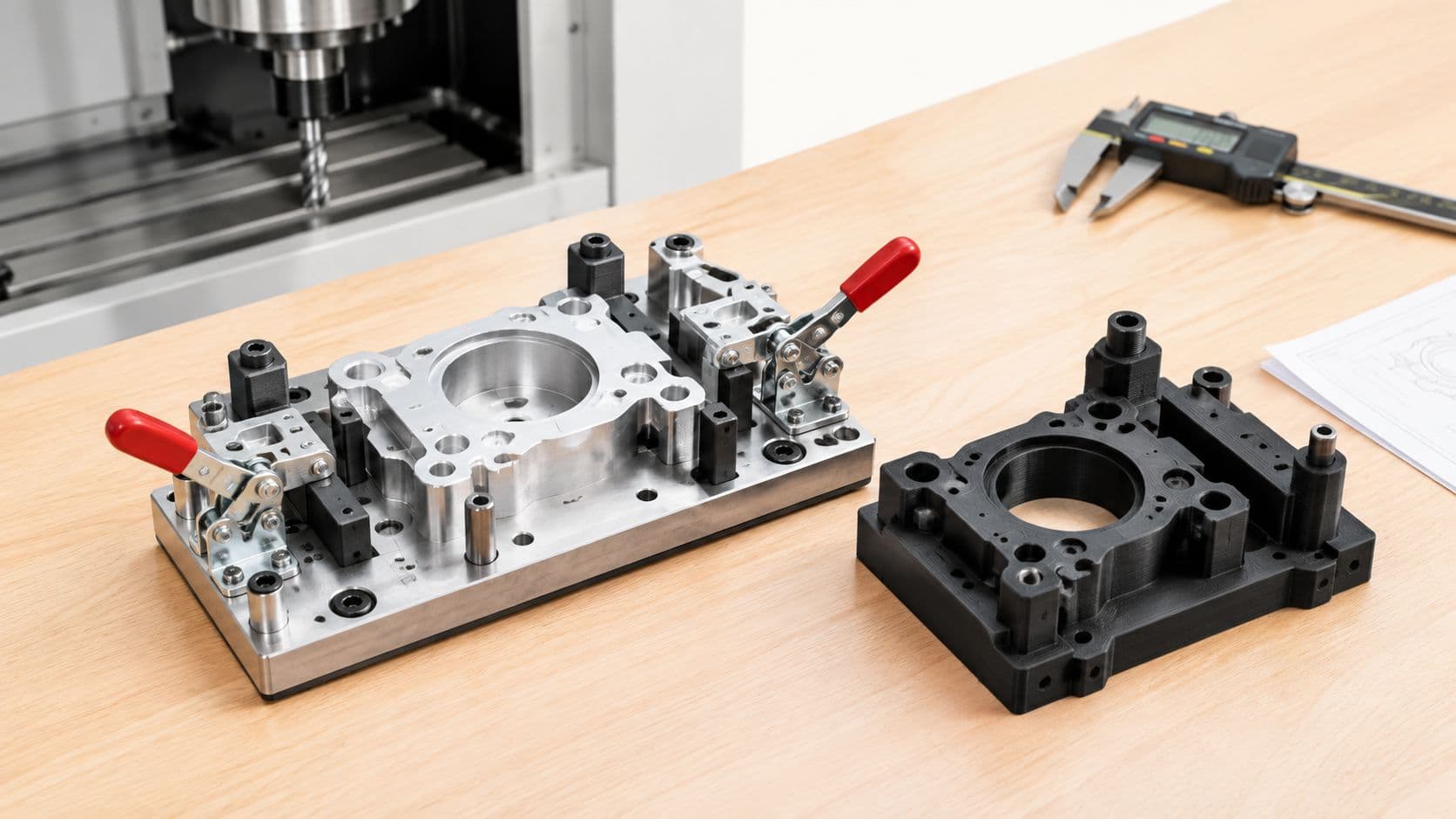
3-axis milling is the workhorse for prismatic parts, brackets, housings, plates, and parts with accessible faces. It's the cheapest path when the geometry can be reached from straightforward orientations. Once a part forces repeated re-clamping, the job stops being simple even if the CAD model still looks clean on screen.
4-axis milling helps when features sit on multiple sides of the part and indexed rotation can cut down on setups. It's a sensible middle ground when you need more access, but not a full five-axis program. 5-axis milling earns its premium when the part has undercuts, compound angles, or a shape that would otherwise need several separate setups. The big benefit is fewer reorientations, which reduces tolerance stack-up and keeps the inspection burden under control.
The moment a design needs several fixtures to reach all faces, the quote stops being about cutting time. It becomes a setup problem.
Turning and live tooling
Cylindrical parts belong in turning, not milling, when rotational symmetry drives the geometry. Shafts, bushings, sleeves, and round connector bodies are usually better on a lathe, and live tooling can add cross-holes, grooves, and secondary features without moving the part into a separate cell. That matters in low volume because every transfer between machines adds handling risk and another opportunity for tolerance drift.
LC Proto offers 3-, 4-, and 5-axis CNC machining, plus turning, which is the right mix of capability for parts that sit between prototype and small-batch production. That matters only if the geometry justifies it. If the part is still a simple plate, don't pay for multi-axis complexity you don't need.
Choose the process by access, not by habit
- 3-axis for simple, accessible features and low setup count.
- 4-axis when indexed faces reduce repeated fixturing.
- 5-axis when undercuts, compound angles, or stacked tolerances would make multiple setups a waste.
- Turning when round geometry is the dominant feature and concentricity matters.
For a buyer, the key question is not “which machine do you own?” It's “how many times will you have to move this part before it's finished?” The fewer moves, the lower the hidden cost.
Cost and Lead Time Drivers You Can Control
Low-volume CNC pricing is driven less by cutting time than by everything around the cut. Programming, workholding, quoting, inspection, finishing, and supplier capability hit harder when the batch is small. As noted earlier, quote quality matters almost as much as quote price, and the spread between suppliers can be wide even for the same drawing.
What you can control in the RFQ
The fastest way to waste money is to send an ambiguous package. If a shop has to guess at functional faces, finish zones, thread specs, or acceptable cosmetic marks, it will pad the quote or slow down the response. A complete drawing set cuts both risks, and it gives the supplier less room to hide avoidable complexity.
A good RFQ does three things well.
- It defines the part function. Mark the dimensions that matter for fit, assembly, and sealing.
- It separates cosmetics from structure. If only one face needs a premium finish, say so.
- It asks for quantity tiers. A 20-piece, 50-piece, and 100-piece quote shows the cost curve instead of hiding it.
Where lead time really goes
Setup and inspection are the usual time sinks. Once the design forces a second clamping operation or a finishing step, the calendar stretches quickly. The shop has to program, fixture, verify, and inspect, and every extra step creates another chance for delay. A quote that looks cheap on day one can become expensive once the supplier starts clarifying exclusions.
For a deeper pricing breakdown, the complete CNC machining cost guide is useful as a checklist, but the decision still comes back to your RFQ discipline. Ask every supplier the same blunt question, what is driving cost on this part, and what would you change first to reduce it? Shops that answer directly are usually worth more than the cheapest number on the page.
Practical rule: if two quotes differ sharply, do not assume one shop is smarter. Assume one of them understood the job better.
The buyer's job is to compare like with like. The engineer's job is to make sure the quote is not being inflated by avoidable complexity.
When CNC Beats Injection Molding, Vacuum Casting, and 3D Printing
CNC wins when the part needs to be real, not just representative. That usually means production-grade material, repeatable tolerance, and enough revision risk that tooling would be premature. Injection molding, vacuum casting, and 3D printing all have places in low-volume work, but they solve different problems.
The crossover question
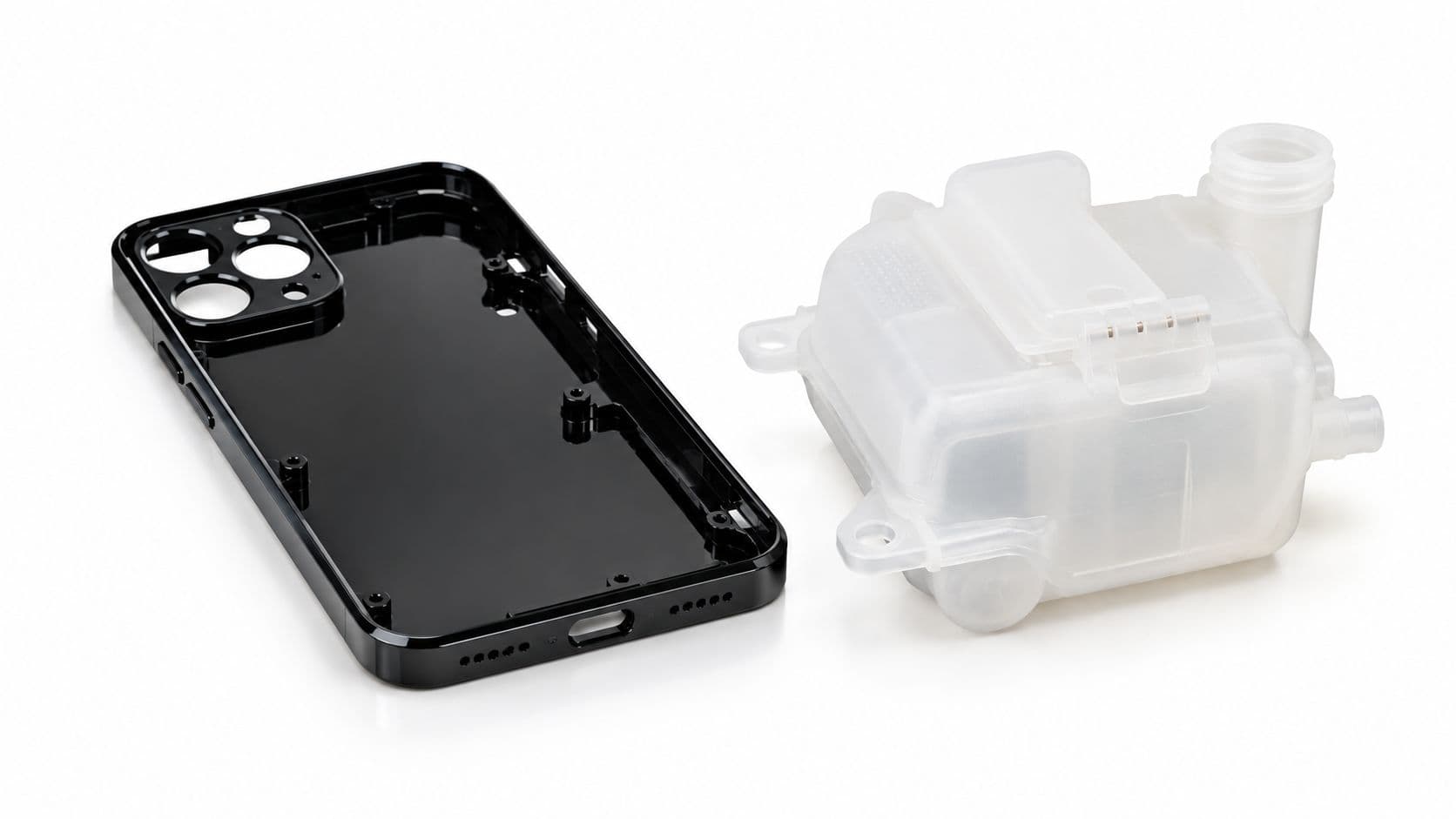
Injection molding with rapid tooling starts to make sense when the run is large enough to amortize mold cost and the design is stable. Vacuum casting fits short runs of polyurethane parts where cosmetic quality matters and the geometry doesn't justify CNC stock removal. 3D printing is strongest when the geometry is hard to machine, the lead time has to be minimal, or the part is still a concept model rather than a production surrogate.
Here's the blunt version. If the part needs machining accuracy and real material behavior, CNC is hard to beat at low volume. If the part is decorative, soft-bodied, or highly complex in internal form, you should compare the alternatives before assuming subtractive manufacturing is the answer.
| Process | Typical Volume Range | Standard Tolerance | Material Range | Surface Finish | Lead Time Profile |
|---|---|---|---|---|---|
| Low Volume CNC Machining | 10 to 1,000 units | ±0.005 in | Broad, metals and engineering plastics | Good from as-machined to anodized | Quote in a day, production often 1 to 3 weeks |
| Injection Molding with Rapid Tooling | 500 to 10,000 units | ±0.01 in | Widest, commodity and engineering resins | Excellent cosmetic finish | About 4 to 6 weeks including mold build |
| Vacuum Casting | 10 to 100 units | ±0.01 in | Limited to castable polyurethane grades | Very high cosmetic finish | About 2 to 3 weeks including silicone mold |
| 3D Printing, SLA, SLS, MJF | 1 to 50 units | ±0.005 to ±0.01 in | Growing range, engineering resins and nylon | Fair to good, often needs post-processing | Often 1 to 5 days |
For a side-by-side process comparison, CNC vs. 3D printing is useful only if you keep the question narrow. The decision isn't which process is technically possible. It's which process protects the design intent without locking you into tooling too early.
Pick the process that matches the risk
- Use CNC when revision agility, tighter tolerance, or production-like material behavior matters.
- Use molding when the geometry is frozen and per-part economics matter more than design changes.
- Use vacuum casting when you need short runs of cosmetic polyurethane parts.
- Use 3D printing when the shape is too complex for practical machining or the lead time is the main constraint.
The crossover window is where procurement gets trapped. Several processes can technically make the part, but only one will make sense once you factor in setup, revisions, and launch timing. That's the one to buy.
DFM Rules That Protect Budget and Lead Time
Most low-volume CNC cost overruns come from bad features, not bad machine time. A part that forces awkward tool access, unstable walls, or excessive tolerance control will move from a simple setup to a complicated one. The design rules are straightforward, and they matter most in 3-axis work where the cutter has limited access.
Geometry that machines cleanly
Keep internal corner radii larger than the cutter radius. If the cutter can't physically make a sharp corner, the shop will need a workaround or a secondary operation. The same principle applies to pockets and cavities, which should stay reasonably shallow relative to width so the tool doesn't chatter or deflect.
Design rule: if the feature forces the cutter into a corner it can't naturally reach, expect the quote to rise.
A good practical habit is to keep cavity depth around 4× cavity width or less when you want stable cutting and lower scrap risk. Deep, narrow pockets are where cutters break, surfaces degrade, and inspection time climbs. Blind threads should stay under 3× diameter so chips can evacuate cleanly and thread quality stays predictable. Those are simple rules, but they prevent a lot of hidden rework.
Tolerance where it matters
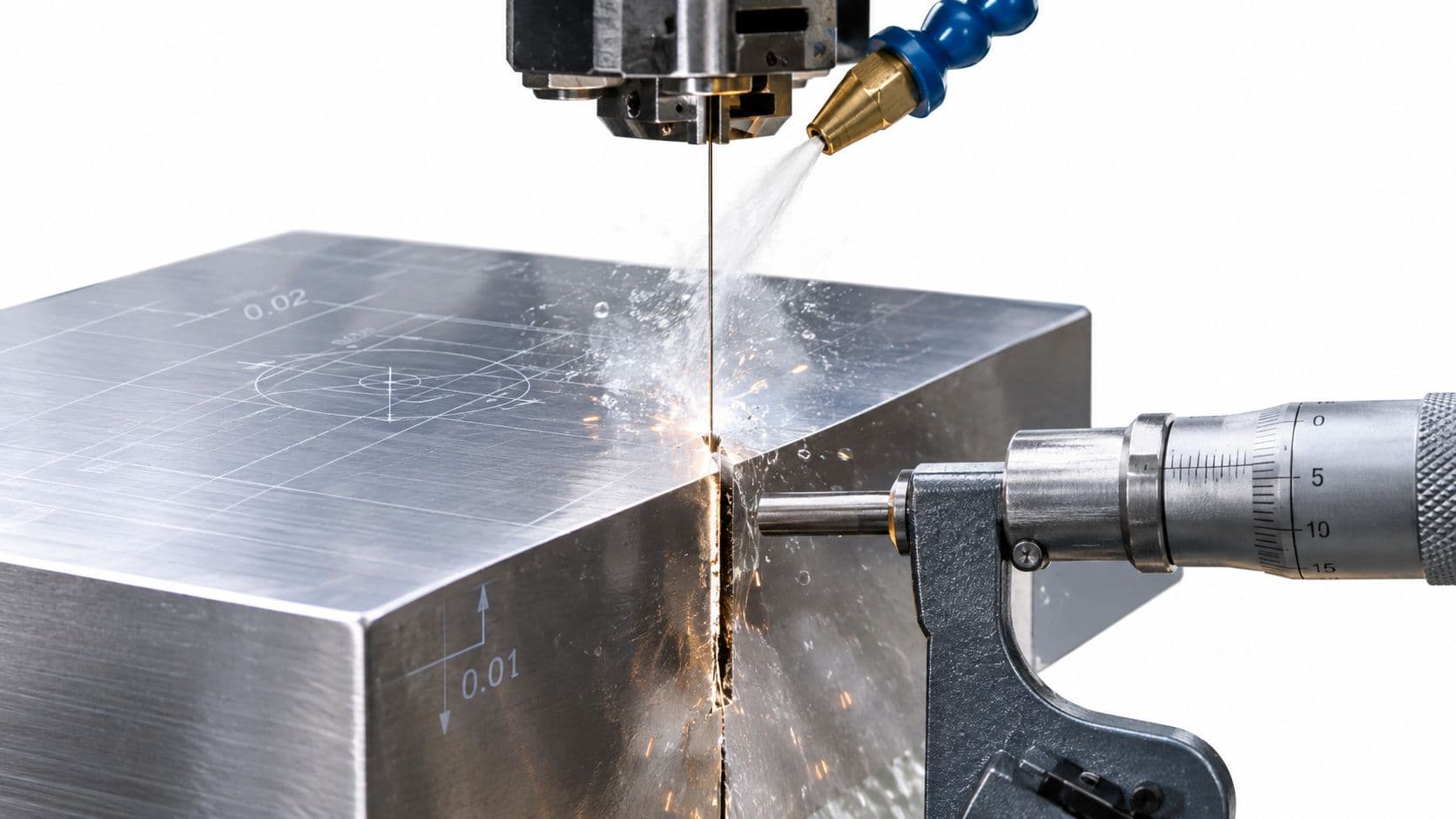
Don't specify tight tolerance everywhere. Match tolerance to function, not to anxiety. A standard ±0.005 in class is often enough for many features, while tighter zones should be reserved for interfaces, seal surfaces, and fit-critical dimensions. Tightening tolerances across the board turns a small-batch job into an inspection-heavy job very quickly.
That matters even more if the part is likely to need multiple setups. Every reorientation magnifies the effect of feature-to-feature variation, which is how a part that looked easy in CAD becomes expensive on the machine. If a design really needs 5-axis access, use it deliberately. Don't stumble into it through poor geometry.
A checklist for the CAD review
- Radii first: make inside corners generous enough for standard end mills.
- Depth second: avoid deep, narrow cavities unless the function justifies the risk.
- Threads third: keep blind threads realistic so chips can clear.
- Tolerance last: tighten only the features that control fit or performance.
The cheapest part is rarely the one with the fewest features. It's the one that stays within standard cutter envelopes and doesn't force the shop to fight the geometry.
Supplier Selection and Quality Control Checklist
A low-volume CNC supplier should be judged like a risk partner, not a catalog item. The cheapest quote means nothing if the shop can't inspect the work properly, handle your files securely, or tell you where the design is likely to fail before cutting begins.
What to verify before award
Start with quality systems. For regulated or high-reliability work, ask whether the shop holds ISO 9001, ISO 13485, or IATF 16949 where relevant. Then ask what inspection capability sits in-house. CMM access, scanning, and documented checkpoints before shipment matter more than a polished sales page.
The file-handling conversation matters too. A supplier that can accept STEP, IGES, STL, SolidWorks, DXF/DWG, and PDF cleanly is usually better organized than one that makes you reformat everything by hand. If quote response times are slow or engineering questions get generic answers, expect the same behavior once production starts.
For a broader manufacturing audit checklist, quality control in manufacturing is a sensible reference point, but the buying decision should stay practical. Ask for the inspection plan, not just the certification badge.
What good supplier behavior looks like
- Clear DFM feedback: they point out trouble spots before quoting, not after.
- Documented checkpoints: they can show where parts are measured before shipment.
- Fast technical response: they answer setup, tolerance, and finish questions directly.
- Post-delivery support: they stand behind nonconforming parts with a real corrective path.
LC Proto is one option in this space, with CNC machining, 3D printing, sheet metal fabrication, injection molding, vacuum casting, and dimensional inspection under one roof. That kind of breadth only matters if the shop also explains where the design is likely to cause trouble, and whether the part should stay in CNC or move to another process.
The supplier that protects your schedule and flags a bad feature early is worth more than a slightly lower unit price. That's the filter that keeps small-batch programs from turning into repair work.
Practical Use Cases and a Short Decision Framework
Low-volume CNC shows up in a few repeat scenarios. The first is prototype validation before tooling, where the part has to behave like the final product. The second is bridge production, where you need sellable or testable units while harder tooling is still in motion. The third is regulated or high-reliability work, where material behavior and inspection discipline matter more than the absolute lowest piece price. The fourth is small-batch customization, where each order changes enough that dedicated tooling would be reckless.
A simple crossover rule
Choose CNC when the constraint is tolerance, material, or revision agility. Move toward injection molding once the design is stable enough that tooling cost can be amortized across the run. Use vacuum casting when the part is a short-run polyurethane piece and the mold cost would be wasted on CNC stock removal. Use 3D printing when the geometry is awkward for machining or the schedule matters more than process fidelity.
If the part is still moving, keep it in CNC. If the part is frozen and repeats, start pricing tooling earlier than you think.
The important thing is not to treat all 50-piece orders the same. A 50-piece batch of simple brackets and a 50-piece batch of precision housings are completely different sourcing problems. One is a straightforward short run, the other may already be at the edge of a better process.
For your next RFQ, send the drawing package, ask for two quantity tiers, and force the supplier to explain what drives cost first. That one habit will tell you more about the right process than a dozen generic sourcing pages ever will.
If you're ready to move a short-run part from CAD to production without guessing at process selection, material choice, or setup risk, visit LC Proto and ask for a quote that includes the process, lead time, and inspection plan. Their CNC, finishing, and inspection workflow is built for the exact prototype-to-production jobs that create the hardest buying decisions.