What is CNC Machining: Complete Guide 2025
Introduction
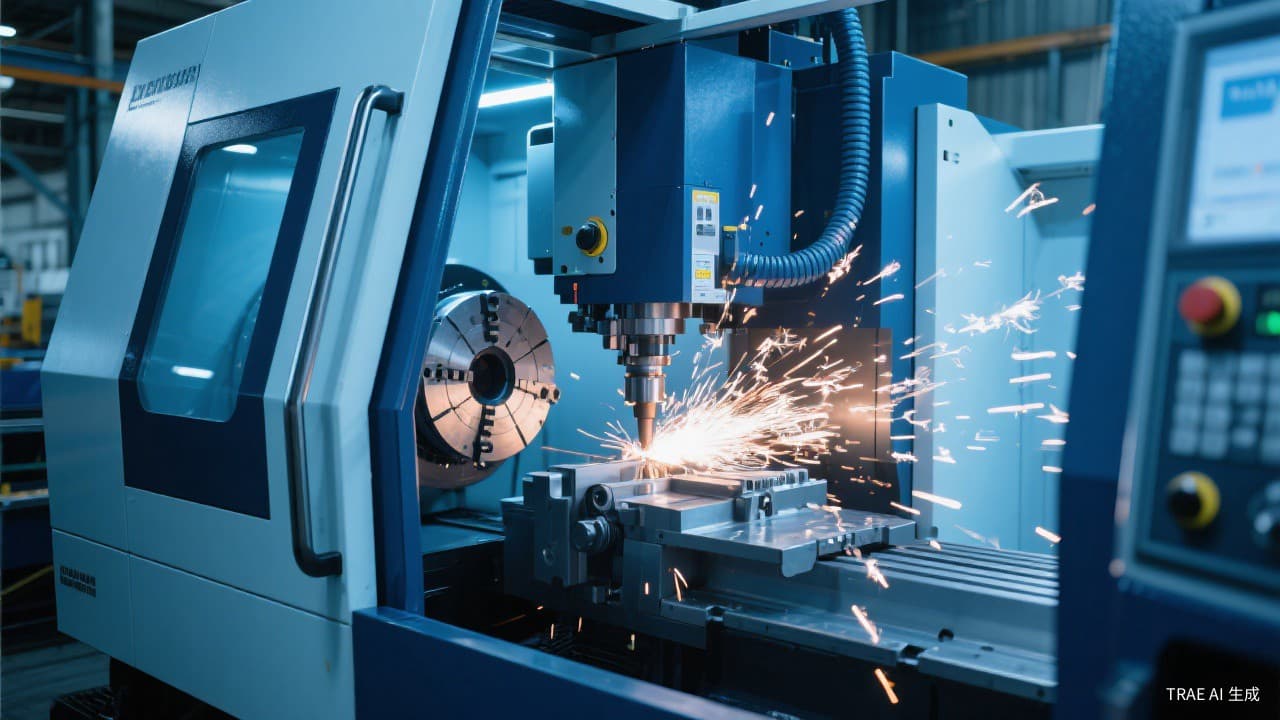
What is CNC machining? CNC (Computer Numerical Control) machining is a manufacturing process that uses pre-programmed computer software to control factory tools and machinery. This technology can be used to control a range of complex machinery, from grinders and lathes to mills and routers.
In this comprehensive guide, we'll explore everything you need to know about CNC machining in 2025—from basic concepts to advanced applications.
Table of Contents
- What is CNC Machining?
- How Does CNC Machining Work?
- Types of CNC Machines
- CNC Machining Process Step-by-Step
- Materials for CNC Machining
- Advantages of CNC Machining
- Applications and Industries
- CNC Machining vs 3D Printing
- Choosing a CNC Machining Service
- FAQ
What is CNC Machining?
CNC machining is a subtractive manufacturing process, which means it creates parts by removing material from a solid block (called a workpiece or blank) using various cutting tools. The computer controls the movement of these tools with extreme precision, following coordinates defined in the CAD/CAM software.
Key Characteristics:
- Precision: Tolerances as tight as ±0.001" (0.025mm)
- Repeatability: Produces identical parts consistently
- Versatility: Works with metals, plastics, composites, and more
- Automation: Runs 24/7 with minimal human intervention
- Complexity: Creates intricate geometries impossible with manual machining
How Does CNC Machining Work?
The CNC machining process involves several key components working together:
1. CAD Design
Engineers create a 3D model using Computer-Aided Design (CAD) software like SolidWorks, Fusion 360, or AutoCAD.
2. CAM Programming
The CAD file is converted into machine instructions using Computer-Aided Manufacturing (CAM) software. This generates G-code, the language CNC machines understand.
3. Machine Setup
- Load the workpiece material
- Install appropriate cutting tools
- Set work coordinates (zero point)
- Load the G-code program
4. Machining Execution
The CNC machine executes the programmed instructions:
- Spindle rotates cutting tools at high speeds
- Axes move precisely along X, Y, Z coordinates
- Coolant flows to prevent overheating
- Material is removed layer by layer
5. Quality Inspection
Finished parts are inspected using precision measuring tools like CMMs (Coordinate Measuring Machines).
Types of CNC Machines
CNC Milling Machines
3-Axis Milling: Basic movement in X, Y, and Z axes. Suitable for simple parts.
4-Axis Milling: Adds rotation around X or Y axis. Enables machining of multiple sides without repositioning.
5-Axis Milling: Simultaneous movement in all five axes. Creates complex geometries with excellent surface finish.
CNC Lathes (Turning Centers)
Rotate the workpiece while stationary cutting tools remove material. Ideal for cylindrical parts like shafts, pins, and bushings.
Types:
- 2-Axis Lathes: Basic turning operations
- Multi-Axis Lathes: Complex turning with milling capabilities
- Swiss-Type Lathes: High-precision small parts
CNC Routers
Similar to mills but optimized for softer materials like wood, plastic, and foam. Common in sign-making and woodworking.
CNC Grinders
Use abrasive wheels to achieve extremely tight tolerances and smooth surface finishes.
CNC EDM (Electrical Discharge Machining)
Uses electrical sparks to machine conductive materials. Ideal for hardened steels and complex cavities.
CNC Machining Process Step-by-Step
Step 1: Design and Engineering
- Create 3D CAD model
- Perform Design for Manufacturing (DFM) analysis
- Define tolerances and surface finishes
- Select appropriate materials
Step 2: CAM Programming
- Import CAD model into CAM software
- Define toolpaths and cutting strategies
- Select cutting tools and parameters
- Simulate machining process
- Generate G-code
Step 3: Material Preparation
- Select raw material stock
- Cut to approximate size
- Clean and deburr edges
- Mark material grade
Step 4: Machine Setup
- Secure workpiece in fixture or vise
- Install and measure cutting tools
- Set tool offsets and work coordinates
- Load G-code program
- Run dry simulation
Step 5: Machining
- Execute roughing operations (remove bulk material)
- Perform semi-finishing passes
- Execute finishing operations (final dimensions)
- Apply surface treatments if needed
Step 6: Quality Control
- Remove part from machine
- Clean thoroughly
- Measure critical dimensions
- Inspect surface finish
- Generate inspection report
Step 7: Post-Processing
- Deburr sharp edges
- Apply surface finishes (anodizing, painting, etc.)
- Assemble if required
- Package for shipment
Materials for CNC Machining
Metals
Aluminum Alloys
- 6061-T6: General purpose, excellent mathe regionbility
- 7075-T6: High strength, aerospace applications
- 2024-T3: High fatigue resistance
- 5052: Good corrosion resistance, marine applications
Stainless Steels
- 303: Free-machining grade
- 304: General purpose, corrosion resistant
- 316: Marine and chemical applications
- 17-4 PH: Precipitation hardening, high strength
Steel Alloys
- 1018: Low carbon, easy to machine
- 4140: Chrome-moly, high strength
- 4340: Nickel-chrome-moly, ultra-high strength
- A2/O1: Tool steels
Exotic Metals
- Titanium: High strength-to-weight ratio
- Inconel: Extreme temperature resistance
- Brass/Bronze: Excellent mathe regionbility
- Copper: High thermal/electrical conductivity
Plastics
Engineering Plastics
- ABS: Good impact resistance, easy to machine
- Delrin (Acetal): Low friction, wear resistant
- Nylon: Self-lubricating, tough
- PEEK: High temperature, chemical resistant
- Polycarbonate: Transparent, impact resistant
- PTFE (Teflon): Lowest friction coefficient
Other Materials
- Wood and composites
- Foam (for prototyping)
- Carbon fiber
- Ceramics (limited applications)
Advantages of CNC Machining
Precision and Accuracy
- Tolerances as tight as ±0.001" (0.025mm)
- Consistent repeatability
- Complex geometries achievable
Efficiency and Speed
- 24/7 unattended operation
- Rapid production rates
- Quick setup for repeat jobs
Versatility
- Wide range of materials
- Simple to complex parts
- Prototype to production volumes
Quality
- Excellent surface finishes
- Consistent part-to-part quality
- Reduced human error
Cost-Effectiveness
- Lower labor costs
- Reduced material waste
- Economical for small to medium volumes
Applications and Industries
Aerospace
- Engine components
- Structural parts
- Landing gear components
- Satellite parts
Automotive
- Engine parts
- Transmission components
- Suspension parts
- Custom modifications
Medical Devices
- Surgical instruments
- Implants
- Diagnostic equipment
- Prosthetics
Electronics
- Heat sinks
- Enclosures
- Connectors
- Test fixtures
Industrial Equipment
- Machine components
- Tooling and fixtures
- Pneumatic/hydraulic parts
- Automation components
Consumer Products
- Sporting goods
- Jewelry
- Watch components
- Custom hardware
CNC Machining vs 3D Printing
| Aspect | CNC Machining | 3D Printing |
|---|---|---|
| Process | Subtractive (removes material) | Additive (adds material) |
| Materials | Metals, plastics, composites | Primarily plastics, some metals |
| Precision | ±0.001" typical | ±0.005" typical |
| Surface Finish | Excellent (as-machined) | Often requires post-processing |
| Strength | Full material properties | Layer-bond dependent |
| Speed | Fast for simple parts | Consistent regardless of complexity |
| Cost | Economical for 1-1000 parts | Economical for 1-10 parts |
| Complexity | Limited by tool access | Almost unlimited geometry |
| Setup Time | Longer (tooling required) | Minimal |
When to Choose CNC Machining:
- Tight tolerances required
- Metal parts needed
- Smooth surface finish critical
- Medium volumes (10-1000 parts)
- Structural applications
When to Choose 3D Printing:
- Highly complex geometries
- Rapid prototyping (1-5 parts)
- Internal channels/lattices
- Design iteration phase
- Plastic parts acceptable
Choosing a CNC Machining Service
Key Factors to Consider
1. Capabilities
- Machine types (3-axis, 5-axis)
- Maximum part sizes
- Material options
- Tolerance capabilities
2. Quality Certifications
- ISO 9001: Quality management
- AS9100: Aerospace standard
- ISO 13485: Medical devices
- ITAR: Defense applications
3. Experience
- Years in business
- Industry expertise
- Portfolio of work
- Customer references
4. Communication
- English proficiency
- Response time
- Technical support
- Project management
5. Location
- Domestic vs. overseas
- Shipping costs and time
- Time zone compatibility
- Import/export experience
Questions to Ask
- What is your typical lead time?
- What tolerances can you hold?
- Do you offer design for manufacturing (DFM) feedback?
- What quality inspection equipment do you use?
- Can you provide material certifications?
- What are your payment terms?
- Do you have experience with [your specific industry]?
FAQ
What does CNC stand for?
CNC stands for Computer Numerical Control. It refers to the automated control of machining tools by means of a computer.
How much does CNC machining cost?
Costs vary based on:
- Part complexity
- Material type
- Tolerance requirements
- Quantity
- Surface finish needs
Typical range: $50-$500 for prototypes, lower per-part costs for production volumes.
What is the difference between CNC milling and turning?
Milling: Rotating cutting tools remove material from stationary workpiece. Good for complex shapes.
Turning: Rotating workpiece is cut by stationary tools. Ideal for cylindrical parts.
How accurate is CNC machining?
Standard CNC machining achieves ±0.005" (0.127mm) tolerances. Precision machining can achieve ±0.001" (0.025mm) or better.
What materials can be CNC machined?
Virtually any rigid material: aluminum, steel, stainless steel, titanium, brass, plastics, composites, wood, and foam.
How long does CNC machining take?
Prototype parts: 3-5 days
Simple parts: Hours
Complex parts: Days
Lead time depends on shop capacity and part complexity.
Can CNC machines run unattended?
Yes, modern CNC machines can run lights-out (24/7 unattended) with proper:
- Tool monitoring
- Workpiece feeding systems
- Quality checking
- Error detection
What is G-code?
G-code is the programming language that tells CNC machines what to do. It controls movements, speeds, feeds, and tool changes.
Do I need a CAD file to get something CNC machined?
Yes, a 3D CAD file (STEP, IGES, or native format) is required. Some shops offer design services if you only have sketches or ideas.
What is the minimum order quantity for CNC machining?
Most CNC shops have no minimum order quantity (MOQ). You can order a single prototype part.
Conclusion
CNC machining remains the gold standard for precision manufacturing in 2025. Its combination of accuracy, versatility, and efficiency makes it indispensable across virtually every industry.
Whether you need a single prototype or thousands of production parts, understanding CNC machining helps you make informed decisions about your manufacturing projects.
Ready to start your CNC machining project? Contact FIRMFG for a free quote and expert engineering support.
Last updated: January 15, 2025
About the Author: FIRMFG Engineering Team has over 10 years of experience in CNC machining and rapid prototyping, serving customers in aerospace, automotive, medical, and electronics industries worldwide.