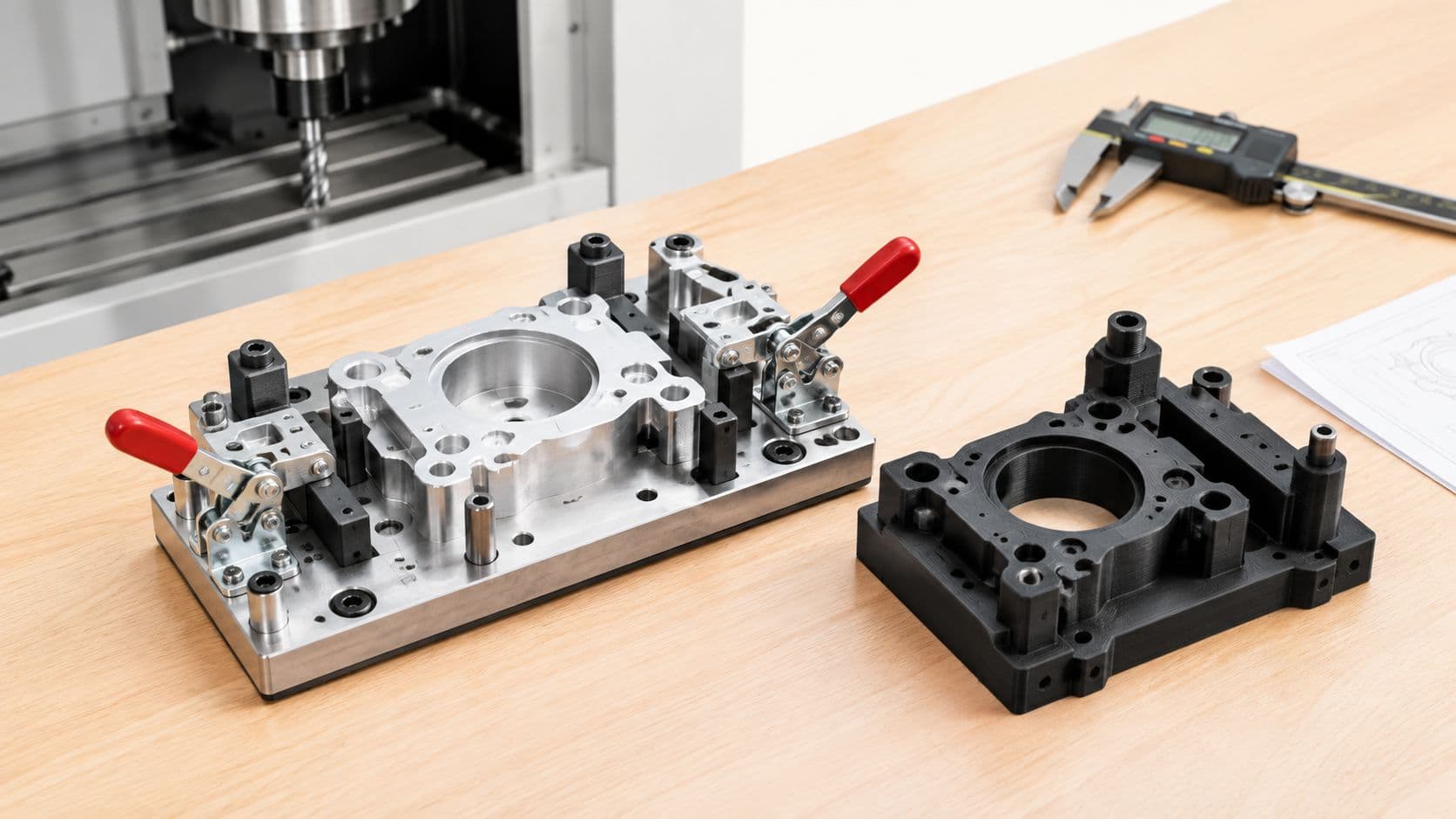
CNC Turning Services: A Buyer's Guide for 2026
You've got a part on the screen right now that looks simple enough. Maybe it's a shaft, a threaded adapter, a spacer, a bushing, or a small housing with concentric features. Then the quote requests go out, and suddenly the “simple” part comes back with very different prices, very different lead times, and a lot of supplier questions that should have been obvious earlier.
That's the point where CNC turning stops being a generic process label and becomes a sourcing decision. The buyer who understands what drives cycle time, setup risk, inspection burden, and secondary operations usually gets better parts faster. The buyer who doesn't often pays for avoidable complexity.
This guide is written for that decision point. If you're choosing between turning, milling, and other options, or trying to compare CNC turning services from multiple suppliers, the useful questions are practical: Is the geometry right for a lathe? Which tolerances matter? Which finish calls create cost without improving function? What should a competent supplier flag before production starts?
Table of Contents
When to Choose Turning Over Other Processes- How turning actually removes material
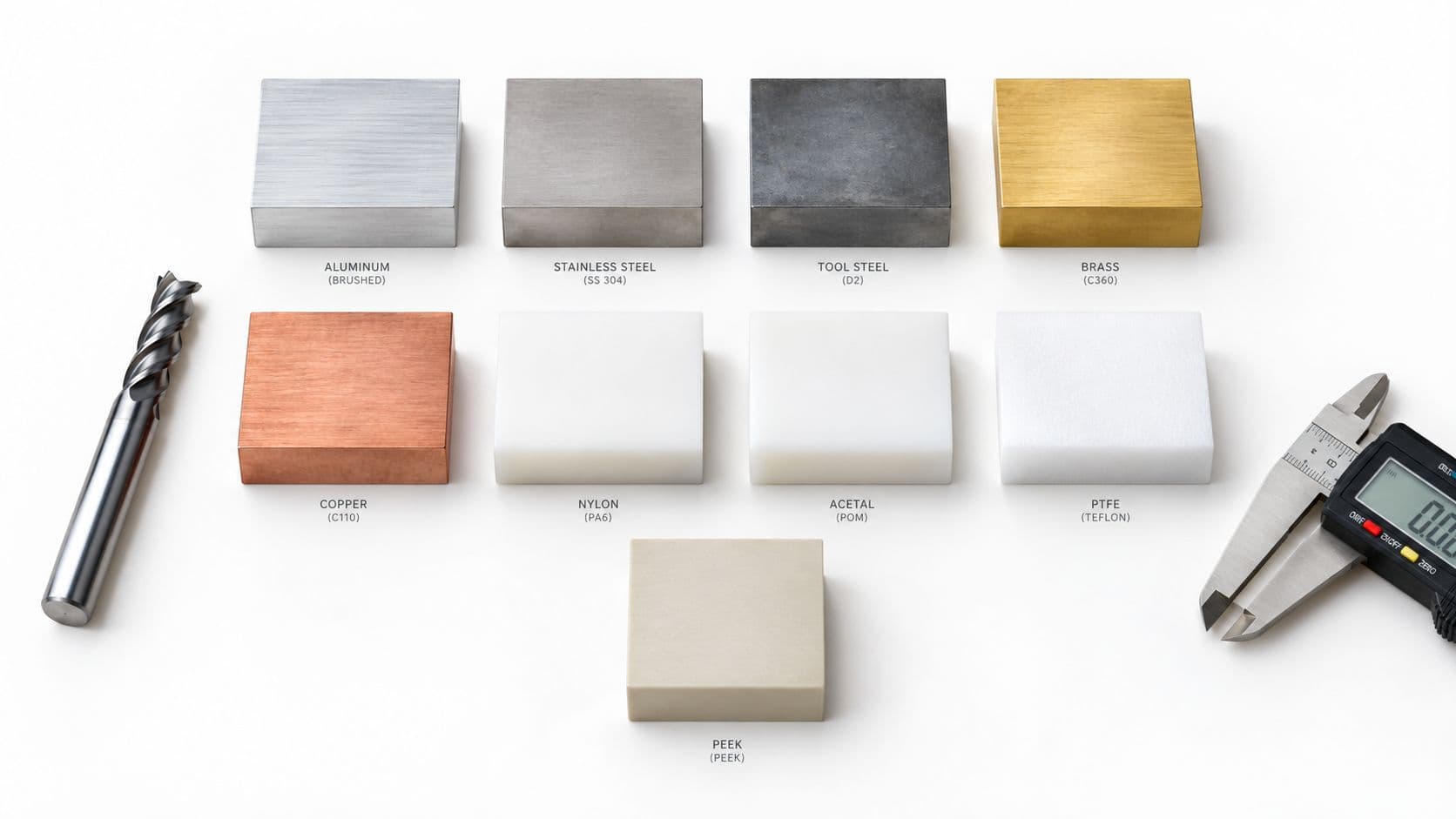
Key Specifications Materials Tolerances and Finishes- Material choice changes the whole job
DFM for CNC Turning to Reduce Cost and Lead Time- Geometry decisions that help the shop
Understanding Pricing and Lead Time Drivers- What you are actually paying for
How to Evaluate a CNC Turning Supplier- Capability questions worth asking before PO
From CAD to Component A Workflow Example
What Are CNC Turning Services
An engineer designs a custom driveshaft, then has to answer the manufacturing question that decides everything after it. Not “can this be made,” but “what process will make it accurately, repeatably, and without turning a routine part into an expensive one?” If the geometry is rotational, CNC turning is usually the first place to look.
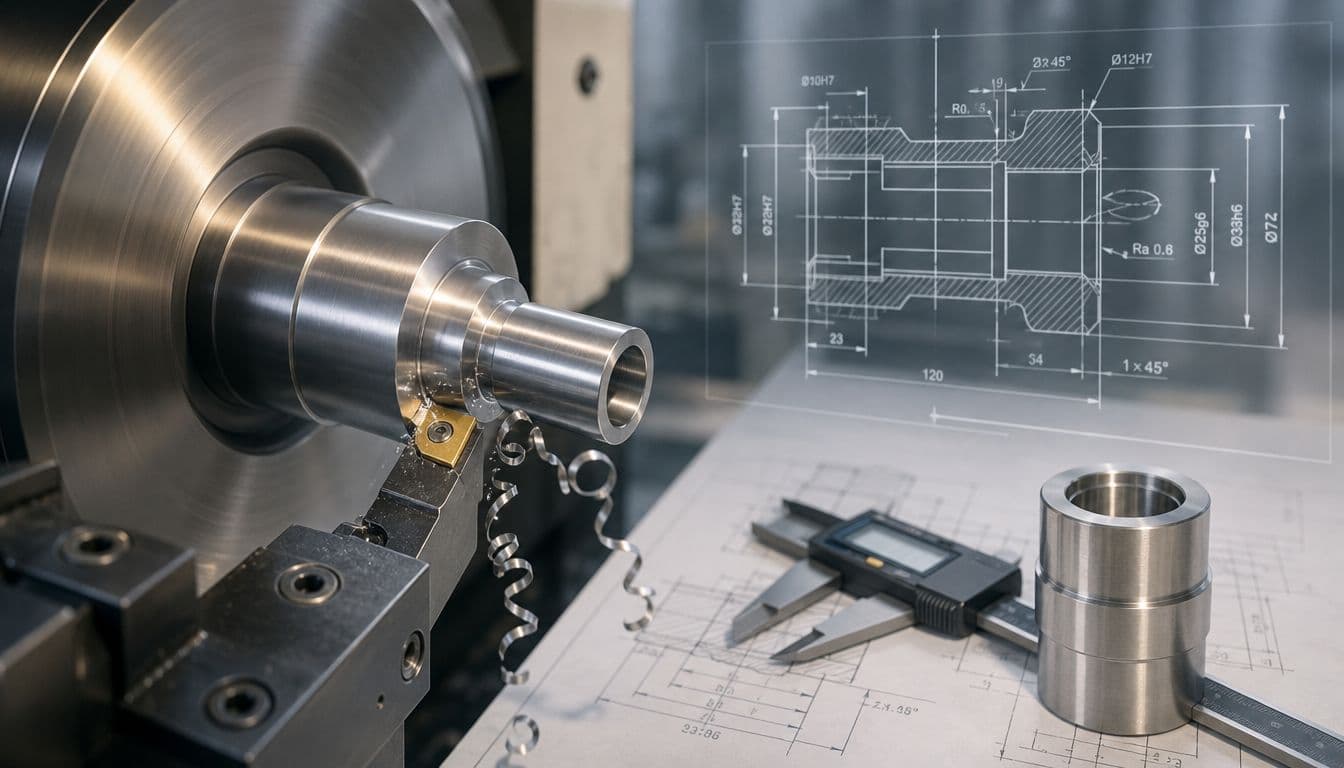
CNC turning services produce parts by rotating the workpiece while a cutting tool removes material. That sounds simple because the core principle is simple. The practical advantage is that the process naturally fits cylindrical and concentric geometry. Shafts, pins, bushings, threaded fittings, rollers, sleeves, and many housings are far more efficient to machine this way than by trying to force the job into a milling workflow.

Why turning matters in real manufacturing
This isn't a niche process. CNC turning is the second-largest segment within the global CNC machining services market, capturing approximately 27.8% of total global revenue in 2025, according to Dataintelo's CNC machining services market report. That same report values the broader CNC machining services market at $93.4 billion in 2025 and notes that turning's share is driven heavily by demand for rotary and cylindrical components such as shafts, pistons, and bushings.
That market position tells you something useful as a buyer. Turning isn't just common. It's a foundational manufacturing process because so many mechanical systems rely on round, concentric, threaded, or bearing-related features.
For a broader process comparison, this practical guide to CNC machining for engineers is useful background. But when the part's function depends on rotational symmetry, turning is often the process that gives you the cleanest path on cost, tolerance control, and repeatability.
Practical rule: If the critical dimensions share a centerline, start with turning and only add milling operations where the design truly needs non-rotational features.
What buyers often miss
Many sourcing problems start when a turned part is treated like a generic machined part. The RFQ goes out with a complete model but an incomplete manufacturing intent. The shop then has to guess which diameters are critical, whether surface finish is cosmetic or functional, and whether a groove or undercut is mandatory or just inherited from CAD habits.
That guesswork costs money. Good CNC turning services reduce it early, before setup, tooling, and inspection plans are locked in.
When to Choose Turning Over Other Processes
Turning is the right choice when the part wants to spin. That's the simplest way to think about it. If most of the geometry is defined around a centerline, a lathe does the work efficiently because the machine rotates the stock and the tool cuts the profile.
How turning actually removes material
A useful mental model is a potter's wheel, except the material is metal or plastic and the toolpath is controlled by CNC code rather than hand pressure. The workpiece spins. The tool advances in controlled directions. Features like outside diameters, inside diameters, faces, grooves, tapers, and threads are generated by that relative motion.
That matters because it explains both the strengths and limits of turning. The process is naturally fast and stable for concentric features. It becomes less natural when the part has flats, side pockets, offset holes, or prismatic faces that don't share the rotational axis.
Where turning wins and where it does not
Choose turning first when the part is mostly:
- Shaft-like with multiple diameters, shoulders, grooves, and chamfers
- Bored or sleeved with concentric internal and external features
- Threaded on the OD, ID, or both
- Tapered or contoured around the centerline
- Produced in repeated batches where setup and toolpath optimization matter
Choose milling first when the part is mostly block-like, plate-like, or driven by non-round features. Choose additive manufacturing when geometry complexity outweighs the need for the material properties, finish, or dimensional behavior typically expected from machined parts.
| Criterion | CNC Turning | CNC Milling | 3D Printing (SLA/SLS) |
|---|---|---|---|
| Primary geometry fit | Cylindrical, conical, concentric | Prismatic, planar, multi-face | Complex freeform shapes |
| Best feature orientation | Around a centerline | Across multiple faces | Shape-driven rather than tool-access-driven |
| Threads and grooves | Strong fit | Possible, often less direct for round parts | Often post-processed if functional |
| Surface finish off machine | Usually strong on round features | Strong on milled faces and pockets | Depends on process, often needs finishing |
| Batch repeatability | Excellent for rotary parts | Excellent for block-like parts | Good for prototypes and some low-volume work |
| Cost risk | Non-rotational features added later | Round parts may take extra operations | Functional machining requirements can erase savings |
Don't pick turning because the part is “kind of round.” Pick it because the critical features are axis-based.
A common mistake is sending a part to a turning supplier when only one feature is cylindrical and the rest of the part needs significant cross-drilling, side milling, or indexing. Modern turn-mill equipment can handle a lot, but that doesn't mean it's the lowest-cost route. Every live-tool operation or repositioning step adds complexity.
Another mistake goes the other direction. Buyers sometimes send a simple turned component to a milling-focused shop because they already use that supplier for other parts. The result is often a technically acceptable quote and a commercially weak one.
If the design intent is rotational, turning usually gives you the shortest path to a stable process.
Key Specifications Materials Tolerances and Finishes
Bad quotes often start with incomplete specifications. Not missing dimensions. Missing manufacturing intent. In CNC turning services, the three inputs that shape quality, price, and lead time most directly are material, tolerances, and finish requirements.

Material choice changes the whole job
Material selection isn't just a mechanical-property decision. It affects chip control, tool wear, stock availability, inspection strategy, and finishing options.
Common turned materials include:
- Aluminum 6061 for general-purpose housings, spacers, adapters, and weight-sensitive parts
- Stainless steel 304 or 316 for corrosion resistance and more demanding service environments
- Brass for fittings, valves, electrical parts, and components where machinability matters
- Delrin for low-friction bushings, fixtures, and light-duty precision plastic parts
- PEEK where temperature, chemical resistance, or performance requirements justify the extra cost
- Nylon for wear parts, insulators, and less rigid plastic components
Each choice changes the quote. Stainless and high-performance plastics often raise machining difficulty. Brass usually machines cleanly. Aluminum is versatile, but thin sections can still deform if the design isn't stable.
The precision side of the market is growing with that demand. The dedicated Global CNC Turning Service Market was valued at $2,307.4 million in 2024 and is projected to reach $4,500.0 million by 2035, expanding at a CAGR of 6.3%, according to Wise Guy Reports on the CNC Turning Service Market. That projection aligns with what buyers see in practice: more applications require parts that aren't just machined, but machined predictably.
For a deeper discussion of tolerance frameworks and drawing practice, this complete guide to CNC machining tolerances is worth keeping handy.
Tolerance strategy should follow function
Not every diameter needs the same control. That sounds obvious, but many drawings still apply tight limits everywhere because it feels safer. It isn't. It often creates more setups, slower feeds, more measurement time, and higher scrap risk without improving part function.
Use a simple rule set:
- Tighten only mating features such as bearing journals, sealing diameters, press fits, and thread-related dimensions.
- Relax non-critical lengths and cosmetic diameters where assembly and performance won't change.
- Identify datum strategy clearly so the shop knows what concentricity and runout matter.
- Match tolerance language to inspection reality. If you call out something tightly, expect it to be measured and potentially documented.
Tight tolerances don't signal engineering rigor by themselves. They signal cost.
Finish callouts need a purpose
Finish requirements often get copied from old prints. That's where cost hides. A standard machined finish may be completely acceptable for an internal spacer, while a sealing land or visible consumer-facing part may justify a tighter texture or secondary finish.
Common requests include:
- As-machined for functional prototype or industrial parts
- Bead blasting to create a uniform matte appearance
- Anodizing for aluminum corrosion resistance or color identification
- Polishing for cosmetic surfaces or reduced friction in specific areas
The key is to call out finish where it matters, not everywhere. If only one diameter interfaces with a seal, specify the requirement there. If the part only needs cosmetic consistency on visible surfaces, say that directly.
A clear drawing gives the supplier fewer chances to make the wrong assumptions.
DFM for CNC Turning to Reduce Cost and Lead Time
Most turned-part savings happen before the PO. Once the machine is set, that flexibility is gone. Good DFM for CNC turning services doesn't mean compromising function. It means removing geometry that forces slow tools, awkward workholding, extra operations, or unnecessary inspection.

A useful companion reference is this practical engineering guide to design for manufacturability, especially when the part may move between prototype and production volumes.
Geometry decisions that help the shop
The easiest wins usually come from feature simplification.
- Use standard thread forms and sizes. Custom threads can be necessary, but standard threads reduce programming friction, tooling risk, and inspection hassle.
- Avoid deep, narrow grooves unless function requires them. These features often need specialized tools and can slow the cut.
- Prefer generous radii over sharp internal transitions. Sharp corners drive tool limitations and may create weak or inconsistent results.
- Keep long, slender parts supported. Thin shafts can deflect during cutting, which hurts concentricity and finish.
A part can be perfectly machinable in CAD and still be annoying on the machine. That usually shows up as chatter, poor chip evacuation, burr formation, or unstable repeatability across the batch.
Drawing habits that save money
A lot of cost comes from what the print asks the shop to prove, not just what it asks the shop to cut.
Here's what works better:
- Dimension from functional datums. That tells the machinist and inspector what matters in assembly.
- Apply geometric controls selectively. Don't stack every callout available just because the CAD system makes it easy.
- Separate cosmetic requirements from performance requirements. A polished OD and a bearing fit aren't the same thing.
- Call out deburr expectations realistically. “Break sharp edges” is often enough. Over-specified edge conditions can trigger handwork.
A good turned-part drawing reads like an assembly document, not a legal defense document.
One practical example is an undercut at the base of a shoulder. If the mating part needs clearance, keep the relief. If it doesn't, don't inherit it from an old model. Small inherited features often become repeat cost.
Another is wall thickness near the chucking area. If the final operation leaves a thin unsupported section, expect more process caution. That can mean slower cutting and more inspection.
If you want lower cost and shorter lead time, make the easy features easy. Save complexity for the geometry that earns its place.
Understanding Pricing and Lead Time Drivers
Two turned parts can look similar in a screenshot and price very differently. Buyers usually see the difference only after the quotes arrive. Shops see it in setup time, stock choice, cycle stability, metrology load, and post-processing steps.
What you are actually paying for
A CNC turning quote typically combines several cost buckets.
First is setup and programming. Even a simple part needs CAM work, machine preparation, tool selection, workholding decisions, and first-piece verification. On low quantities, this fixed effort can dominate the per-part price.
Second is machine time. The longer the spindle runs and the more tool changes the process needs, the more the part costs. Grooves, threads, multiple diameters, bores, and secondary cross features all add time differently.
Then there's material. Stock form matters. A part machined from oversized bar throws away more material and may run longer than one designed closer to standard stock sizes.
A quote can also include:
- Inspection effort for tight or heavily toleranced features
- Secondary operations such as anodizing, plating, heat treatment, marking, or polishing
- Packaging requirements if the part is cosmetic, delicate, or traceability-sensitive
- Batch structure because setup gets spread differently across prototype, pilot, and repeat orders
Why lead times move around
Lead time isn't just “shop backlog.” It's the total chain from material release to shipment.
Common delays come from:
- Material availability when a specific alloy, diameter, or certification requirement isn't in stock
- Machine scheduling if the part needs a specific lathe configuration or live tooling
- Outside processing for coating, passivation, heat treatment, or plating
- Engineering clarification when the drawing leaves thread class, finish scope, or inspection expectations ambiguous
One supplier might quote quickly and still be the slow option if they rely heavily on outside services. Another might quote a longer lead time because they're protecting capacity and inspection bandwidth. Neither is automatically wrong.
If you want better commercial outcomes, ask for the cost drivers behind the quote. Not every shop will provide a line-item breakdown, but competent suppliers can usually explain whether the price is being pushed by setup, tolerance risk, material, or finishing.
That explanation matters. It tells you where redesign can help and where it won't.
How to Evaluate a CNC Turning Supplier
A turned part can be easy to quote and hard to deliver well. That's why supplier evaluation should focus less on marketing language and more on process evidence. You're not buying spindle time. You're buying predictable execution.

Capability questions worth asking before PO
Start with machine fit. Ask what kinds of lathes the supplier uses for parts like yours. Basic two-axis turning is fine for straightforward shafts and bushings. Live-tooling or turn-mill capability matters when the part includes milled flats, cross holes, or indexed features.
Then ask about part range and material familiarity. A shop that handles aluminum spacers all day may not be the right fit for slender stainless shafts or high-performance plastic parts with tighter stability demands.
A practical checklist:
- Machine capability: Can they run simple turning only, or also live-tool and multi-operation parts?
- Material familiarity: Have they machined your material family enough to flag burr, deflection, or finish issues early?
- Prototype to production path: Can they support first articles and repeat runs without changing suppliers?
- Inspection match: Do they inspect the way your drawing expects to be inspected?
If you need one supplier that can bridge early prototypes and short production runs, FIRMFG is one example of a provider that combines CNC machining, surface finishing, dimensional inspection, and no-MOQ support within a broader prototyping and production workflow. That kind of model can be useful when parts evolve quickly and procurement wants fewer handoffs.
Quality systems that matter in practice
Certifications matter, but only if they line up with your risk.
- ISO 9001 is the baseline quality-management signal most buyers expect.
- IATF 16949 matters for automotive-driven requirements.
- ISO 13485 matters when medical device documentation and process control are relevant.
Those acronyms don't replace process discipline. Ask what happens between setup and shipment. Good answers include in-process checks, first-article verification, documented inspection plans, and clear handling of nonconforming product.
Ask the supplier how they catch drift during production, not just how they inspect the final part.
Also look at metrology infrastructure. A supplier handling turned parts with finish-sensitive or concentric features should be comfortable discussing CMM inspection, surface measurement, and thread verification when required.
Commercial behavior is part of supplier quality
The most expensive supplier problem often starts as a communication problem.
Watch for these signals during quoting:
| Evaluation area | What good looks like | Warning sign |
|---|---|---|
| RFQ review | Questions focus on function, tolerance, and finish scope | Supplier quotes directly from CAD with no clarifications |
| DFM feedback | They flag features that add risk or cost | They say everything is fine, then adjust later |
| Quote clarity | Process, assumptions, and lead time are understandable | Price arrives with little context |
| Responsiveness | Technical and commercial answers stay aligned | Sales replies fast, engineering stays vague |
| Documentation | They can explain inspection output and traceability options | They avoid specifics on quality records |
A supplier's willingness to challenge the drawing constructively is usually a good sign. Silence at quote stage often becomes noise during production.
The right supplier isn't the one that says yes to everything. It's the one that tells you what will work, what won't, and what will cost more than it should.
From CAD to Component A Workflow Example
A robotics team sends out an RFQ for a custom aluminum housing with a turned outer profile, internal bore, face groove, and a few milled features for mounting. The CAD model is clean. The print is mostly clean. The part looks straightforward until manufacturing reviews the internal groove and realizes the width and corner condition will force a slower tool and extra caution.
The better suppliers don't just return a price. They return a question. Does that groove need its current width and sharp condition for function, or was it modeled that way to mirror a mating seal concept? The engineer checks the assembly and confirms the groove can be widened slightly and relieved at the corner without affecting performance.
That small change improves the process before anything is cut.
The job then follows a typical path:
- File review and quoting with checks on material, critical dimensions, and any finish or inspection notes.
- DFM feedback to remove a feature that adds cost but not function.
- CAM and setup for the turning operations first, then any secondary milling features.
- First-piece inspection against the drawing and model, with special attention on bore size, concentricity-sensitive features, and groove dimensions.
- Production run with in-process checks to make sure the first part and the last part stay aligned.
- Final inspection and shipment with the agreed documentation, which may include dimensional reporting depending on the order.
This workflow is where good CNC turning services separate from commodity quoting. The machine work matters, but the early review matters just as much. A supplier who catches a risky groove, unclear finish scope, or unnecessary tolerance before release saves more time than one who merely runs the print exactly as received.
For engineers and procurement managers, that's the practical takeaway. A good sourcing process starts before the spindle turns. Clear specs, sensible DFM, and disciplined supplier evaluation are what keep a simple round part from becoming an avoidable sourcing problem.
If you're sourcing custom turned parts and want a manufacturing partner that can support prototyping, DFM review, machining, inspection, and shipment in one workflow, FIRMFG is one option to evaluate alongside your current suppliers. Uploading a CAD file early and getting manufacturability feedback before release is often the fastest way to reduce quote churn, revision loops, and avoidable machining cost.