If you want to learn, 'What is vacuum casting?' It is a widely used manufacturing process known for the production of highly detailed parts with exceptional precision.
What is Vacuum Casting? A guide to its Process, Benefits, and Applications
If you want to learn, 'What is vacuum casting?' It is a widely used manufacturing process known for the production of highly detailed parts with exceptional precision. Whether you're working on prototypes or small-batch production, vacuum casting offers the best solution. From my own experience, I can confidently say that if precision and a flawless finish are what you're after, this process delivers outstanding results.
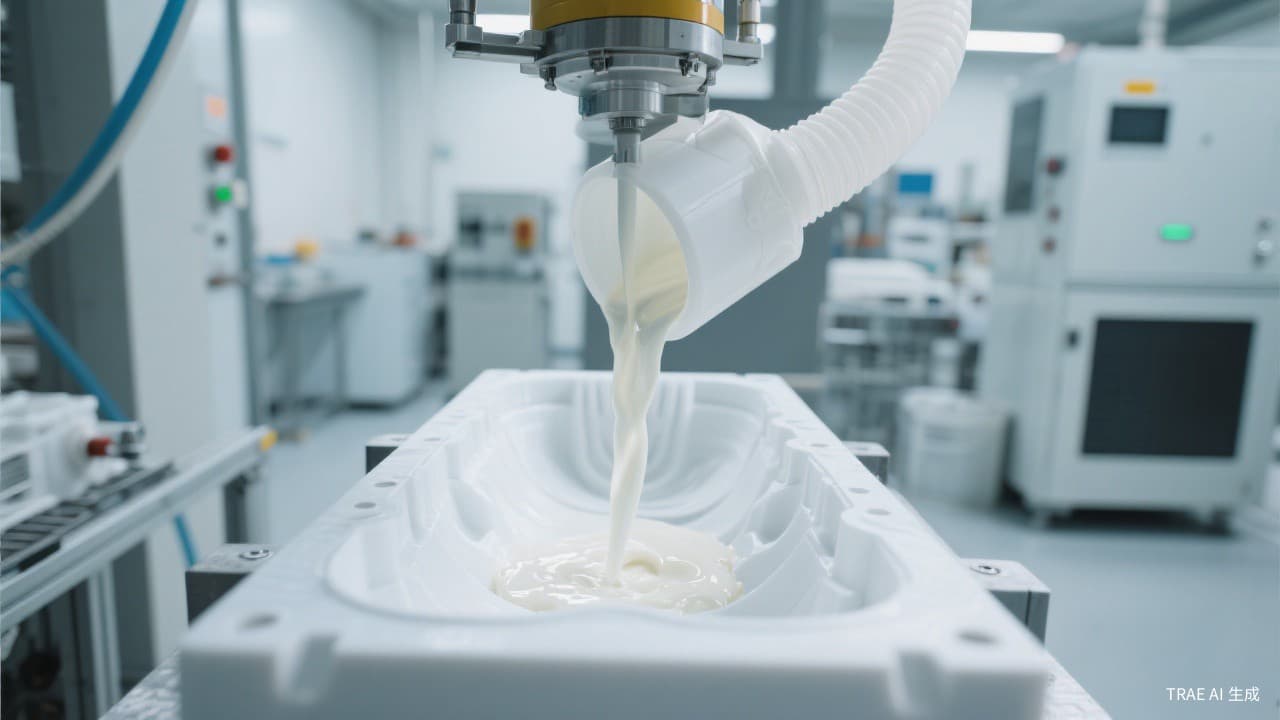
Here's how it works: First of all, you make your master model, it could be 3D printed or CNC machined, whatever's easiest for the job. Then, you build a silicone mold around it. Once that's ready, you pour liquid resin in the mold… but here's the key part: this all happens under a vacuum. That vacuum sucks out all the air, meaning no bubbles in your resin, and you end up with a part that's pretty much flawless. Once it cures, you've got something that's almost a perfect copy of the master model.
As compared to some other methods, like injection molding, vacuum casting is a game-changer for small businesses. Whereas, injection molding is awesome for high-volume stuff. But let's be real, its tooling and setup costs are very high. Vacuum casting, however? Fast turnaround, low costs, and you don't need a whole factory to make it happen. If you're just making a few parts, vacuum casting gets the job done without the crazy costs.
Pros and Cons of Vacuum Casting
| **Pros** | **Cons** |
|---|---|
| Very fine details and high accuracy | Not ideal for large-scale production |
| Cost-effective for small batches | Material restrictions based on its application |
| Wide range of materials choices | |
| Smooth surface finishes |
Pros of Vacuum Casting
Let's dissect this. What is vacuum casting's expertise? What's good and what's not-so-good about the vacuum casting process? There are a few things that make it stand out, especially when we come to prototyping and small-batch runs.
1. High Accuracy and Fine Details
You see, when you need precision, vacuum casting should be your go-to. It's known for great accuracy and sharp details. I've seen parts come out looking pretty much identical to the original model—almost like magic. If your design has intricate details, you are going to love the results. Whether it's rigid plastics or flexible materials, like silicone, vacuum casting does wonders with quality and finishes.
2. Cost-Effective for Low-Volume Production
But the beauty of vacuum casting doesn't stop there. It's cost-effective. Seriously, if you're only making a small batch, this is the way to go. Traditional methods like injection molding might be great for big runs, but you're looking at some overwhelming upfront costs. Not the case here. Vacuum casting? Much cheaper when you don't need thousands of parts. It's perfect for prototype testing, product development, or when you're just trying to get a limited run of parts made.
3. Versatile Material Options
Now, here's another great thing: material options. During the vacuum casting process, you're not stuck with just one type of material. Whether you need ABS-like plastics or clear resins, there's a material for pretty much anything. It's super versatile. From automotive parts to healthcare devices, this method fits the bill for a ton of industries.
4. Superior Surface Finishes
Now, don't even get me started on the surface finishes. If you think smooth, think again. With vacuum casting, your parts come out with a great finish. You can even add custom coatings that introduce some neat stuff like UV protection, wear resistance, and a cleaner overall appearance.
Limitations of Vacuum Casting
But of course, nothing's perfect. There are some downsides to vacuum casting, too. It's not designed for large, mass production. But if you need thousands of parts, other methods may perform better. Making a ton of parts using vacuum casting can take a while and can add to the price of each part. Also, not all materials can be passed through a vacuum.
What is vacuum casting process?
Alright, so you're wondering about vacuum casting process. To be honest, it's like witnessing something come to life, and it's very cool. Let's simplify things and take it one step at a time:
1. Master Model Creation (3D Printing or CNC machining)
So, the master model is where we begin. This can be made using CNC machining or 3D printing, depending on what kind of part you're after. I've had to use both methods myself. If it's a complex design or you need sharp, intricate details, 3D printing is often the way to go. You get to tweak things fast. CNC machining, though, is great when you want that extra precision, especially when working with tougher materials.
2. Silicone Mold Preparation (Curing and cutting)
Now that we have our master model, we get into the fun part—molding. The master is placed in a mold box, and we pour liquid silicone over it. Then comes the curing. This stuff solidifies into a durable, flexible mold. Once the silicone mold cures, it is carefully cut open to reveal the master model inside. What makes this mold extra cool is that it's not a one-off. You may able to use it again for a few pieces. If you're making a small batch, this is a game-changer.
3. Resin Pouring Under Vacuum (Eliminating bubbles)
Now for a bit complicated part. You pour liquid resin into that mold under a vacuum. The vacuum chamber pulls out all the air bubbles. I've seen it firsthand—those bubbles can mess up a perfectly good part, so this is important. All of the fine features are seamlessly incorporated into the resin, and the finished product has a nearly faultless appearance.
4. Curing and Demolding
After the resin has been inserted, it needs to be cured. The mold is placed in an oven, where the heat solidifies the resin. You wait, then carefully demold it once it has cooled. You receive an excellent, accurate duplicate of the original.
5. Post-Processing & Surface Finishing
The vacuum casting process is not completed just after demolding. The part has to be cleaned. Trimming, sanding, and polishing are useful in this situation. Sometimes, there are imperfections that need smoothing out. If the part needs some extra protection or some aesthetic appeal, we do a bit of post-finishing.
Choosing the Right Materials for Vacuum Casting
Choosing the materials for the vacuum casting process? Yes, that is a significant issue. I've had to reconsider my material choice more times than I can count.
Common Material Options
- Rigid Plastics: The finest choices for a robust and long-lasting product are resins that mimic ABS and polycarbonate. These are excellent for components that must be robust and highly resistant to impact.
- Flexible Rubbers: Now, silicone and elastomers are the materials to consider if your part needs to flex, twist, or stretch. These are ideal for consumer, automotive, or medical products where you require a rubber-like feel.
- Transparent Resins: Do you need something transparent, such as light coverings or lenses? Here, PMMA substitutes are your best option. These transparent resins have that glass-like transparency.
Factors to Consider
- Mechanical properties: This is where you consider the part's strength, flexibility, and durability requirements.
- Aesthetic needs: What's the final part supposed to look like? Color, finish, all that jazz.
- Durability: Is the part going to live outside, in the sun, or in some harsh conditions?
Common Applications of Vacuum Casting
What is vacuum casting process? It can be found anywhere. It's actually the unsung hero behind many of the things we use on a daily basis.
Industries Benefiting from Vacuum Casting:
- Automotive & Aerospace: Vacuum casting is revolutionary for these sectors because it makes it possible to quickly and precisely prototype engine parts, dashboards, and housings.
- Medical & Healthcare: For creating personalized prosthetics or housings for medical devices, vacuum casting is the ideal option.
- Consumer Goods & Electronics: As a result, accurate and quick prototypes are required, particularly for product enclosures.
- Industrial Equipment: With vacuum casting, manufacturers can create durable parts in small batches.
Summary
- What is Vacuum casting? In addition to being accurate, it's also reasonably priced. Whether you're producing a small production run or a prototype, this procedure is fantastic for obtaining high-quality parts just as you require them.
- The best part? You've got options. The key is flexibility. Vacuum casting allows you to select materials that meet your needs, whether they are soft rubbers or stiff plastics.
*So, planning to use Vacuum casting for your next project? Contact LC Proto for top-quality and high-precision parts, customized to meet your project's exact specifications.*