ABS vs PP: An Engineer’s Guide to Plastic Selection
You have a housing design, a prototype deadline, and two resin options that seem interchangeable on paper. The hardware team needs functional parts quickly, procurement wants a material that won't disrupt supply, and the designer wants a clean surface with predictable fit. Choosing the wrong plastic can force a redesign, change the tooling plan, or produce a prototype that gives false confidence.
The practical question in ABS vs PP isn't which resin has the higher headline strength. It's which failure mode will dominate the part's life. ABS usually earns the call when impact, rigidity, dimensional control, and appearance matter most. PP often wins when repeated flexing, chemical exposure, low weight, or fatigue resistance controls the design.
Table of Contents
Where ABS and PP Sit on the Plastics Map- What the classification means in a sourcing meeting
Mechanical, Thermal, and Chemical Properties Compared- Impact and dimensional control
CNC Machining and 3D Printing Behavior- CNC prototypes
Injection Molding and Vacuum Casting Behavior- Tooling and surface decisions
Best Applications for ABS and PP by Industry- Rigid housings and visible trim
DFM Recommendations When You Pick ABS or PP- ABS design checks
Choosing a Material and Process for Your Next Build- Make the prototype answer one question
Why ABS vs PP Is a Real Engineering Decision
A battery housing is a useful example because it combines several competing requirements. The enclosure may need to protect internal components during handling, hold bosses and fasteners in alignment, resist cleaners or fluids, and maintain a visible finish. A rigid ABS shell can make sense for the cover, while PP may be more suitable for a flexible latch or an internal component exposed to chemicals.
That choice also changes the manufacturing route. A CNC-machined ABS verification block can give a team a reliable read on fit and appearance. A PP prototype made through powder-bed fusion can provide better evidence for a flexing clip or fluid-contact feature. A vacuum-cast part may be useful for appearance and assembly checks, but an ABS-like or PP-like polyurethane won't reproduce every behavior of the production resin.
The market reinforces this split. Worldwide PP production was approximately 79 million metric tons in 2022, compared with about 8.2 million metric tons for ABS, making PP production roughly 9.6 times larger, according to global plastic production data. PP therefore benefits from extensive high-volume processing infrastructure and broad resin availability. ABS is more deliberately selected for engineered consumer, automotive, electronics, and industrial parts.
The failure mode comes first
Most selection reviews eventually reduce to two families of failure:
- Impact and dimensional failure: The part cracks, deforms permanently, loses alignment, or looks unacceptable after handling. ABS is often the stronger starting point.
- Flex fatigue and chemical failure: The part cracks after repeated bending, attacks under chemical exposure, or fails because it can't tolerate a compliant design. PP is often the better candidate.
Geometry can reverse a simple property-table conclusion. A lower-modulus PP clip may outperform a stronger ABS clip if the PP geometry spreads strain through controlled flexing. Conversely, PP can be a poor choice for a rigid cover whose fit depends on stable edges and a high-quality visible surface.
Practical rule: Select the resin after identifying the dominant failure mode, then validate the geometry and process together.
Where ABS and PP Sit on the Plastics Map
ABS and PP are both thermoplastics, but they occupy different positions in product development. ABS is an amorphous styrenic blend built around acrylonitrile, butadiene, and styrene. It combines rigidity, impact resistance, dimensional stability, and a surface that accepts cosmetic finishing. PP is a semi-crystalline polyolefin valued for low density, chemical resistance, and repeated flexing.
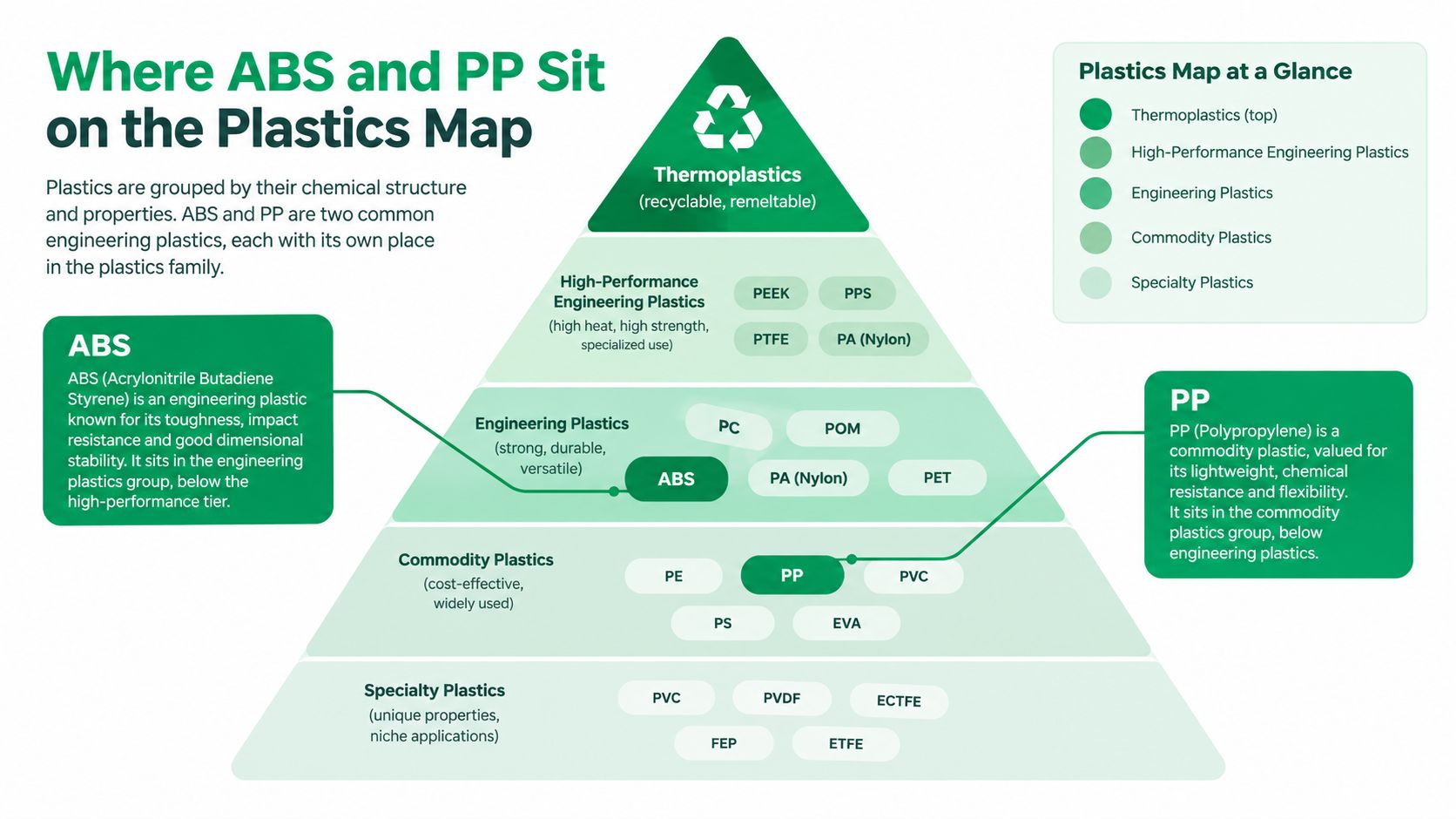
The distinction matters to a buyer. PP's larger production base generally supports broad supplier coverage, color masterbatch availability, and mature high-volume molding routes. ABS remains widely available, but teams more often choose a specific grade for a defined combination of stiffness, toughness, appearance, or processing behavior.
The plastics supply chain itself grew around both commodity and engineering applications. Global plastics production increased from approximately 1.5 million metric tons in 1950 to around 322 million metric tons in 2015, with an estimated compound annual growth rate of about 8.6%, as documented in this ISO plastics industry presentation. That expansion built the compounding, molding, and recycling infrastructure that modern PP and ABS parts depend on.
What the classification means in a sourcing meeting
PP is commonly associated with high-volume molded parts, such as packaging, automotive components, textiles, consumer products, and medical or hygiene goods. Its scale can make it an efficient default where the part doesn't need a premium surface or high rigidity.
ABS sits closer to an intentionally engineered appearance and performance choice. Electronics housings, appliance covers, automotive interior parts, toys, and industrial enclosures often use it because the product team needs a solid feel, controlled geometry, impact resistance, or a finish that looks good without extensive rework.
Neither material replaces the other. PP's production scale doesn't make it suitable for every rigid housing, and ABS's engineering advantages don't justify using it for every flexible or chemically exposed component. The correct choice depends on what the part must continue doing after molding, machining, or printing.
Mechanical, Thermal, and Chemical Properties Compared
A property table is useful only when it changes a design decision. Reported unfilled ABS tensile strength is approximately 40 to 62 MPa, while polypropylene homopolymer is roughly 30 to 40 MPa. ABS also tends to provide greater flexural stiffness and better dimensional control, while PP offers much greater elongation and stronger resistance to repeated flexing.
| Property | ABS (unfilled) | PP (homopolymer) |
|---|---|---|
| Tensile strength | Approximately 40 to 62 MPa | Approximately 30 to 40 MPa |
| Notched Izod impact | Approximately 2.0 to 4.0 ft·lbf/in at 23°C | Grade-dependent, with impact behavior varying by formulation |
| Elongation at break | Approximately 130% to 300%, depending on grade | Approximately 200% to 700%, depending on grade |
| Flexural stiffness | Generally higher | Generally lower |
| Dimensional stability | Generally stronger for rigid, controlled housings | More sensitive to crystalline shrinkage and flexible geometry |
| Chemical resistance | More vulnerable to some solvents and aggressive exposure | Generally strong against many acids, bases, and industrial chemicals |
| Surface finish | Smooth, glossy, paintable, and suitable for cosmetic work | More waxy and difficult to paint or bond without treatment |
The tensile and impact figures come from this ABS and polypropylene material comparison. They shouldn't be treated as universal design values. Copolymer, impact-modified, mineral-filled, and glass-filled grades can materially change the result.
Impact and dimensional control
ABS is usually the safer starting point for a rigid enclosure, instrument panel, tooling cover, or snap-fit cover that must retain its shape after a drop or repeated handling. Its dispersed butadiene phase contributes to impact absorption, while the amorphous structure supports a more uniform dimensional response.
That doesn't mean PP is fragile. PP can deliver useful impact performance, especially in suitable copolymer grades, but its flexibility changes how a part responds. A PP wall may yield and recover where ABS holds its shape. If the product requires a stiff tactile response, tight alignment, or a polished visible face, that flexibility can become a liability.
Flex fatigue and chemical exposure
PP's high elongation is central to its value. A living hinge, compliant clip, pump component, or repeatedly opened enclosure may fail from cyclic strain long before it reaches a static tensile limit. In those cases, PP's ability to deform without cracking can matter more than its lower nominal strength.
PP also has a strong advantage in chemically demanding environments. It is commonly selected for fluid reservoirs, laboratory components, chemical containers, and parts exposed to cleaning agents. ABS can be appropriate where the chemical environment is mild, but solvent compatibility must be checked rather than assumed.
Material selection should follow the actual load history. Static strength favors one comparison, while repeated bending, temperature, weld lines, and chemical exposure can produce a different winner.
CNC Machining and 3D Printing Behavior
Machining and additive manufacturing expose the practical differences between ABS and PP quickly. ABS cuts cleanly, holds a rigid setup, and supports post-processing such as painting, solvent bonding, and vapor smoothing. PP is tougher to machine consistently because its lower modulus can let the material deflect or smear instead of producing a crisp chip.
CNC prototypes
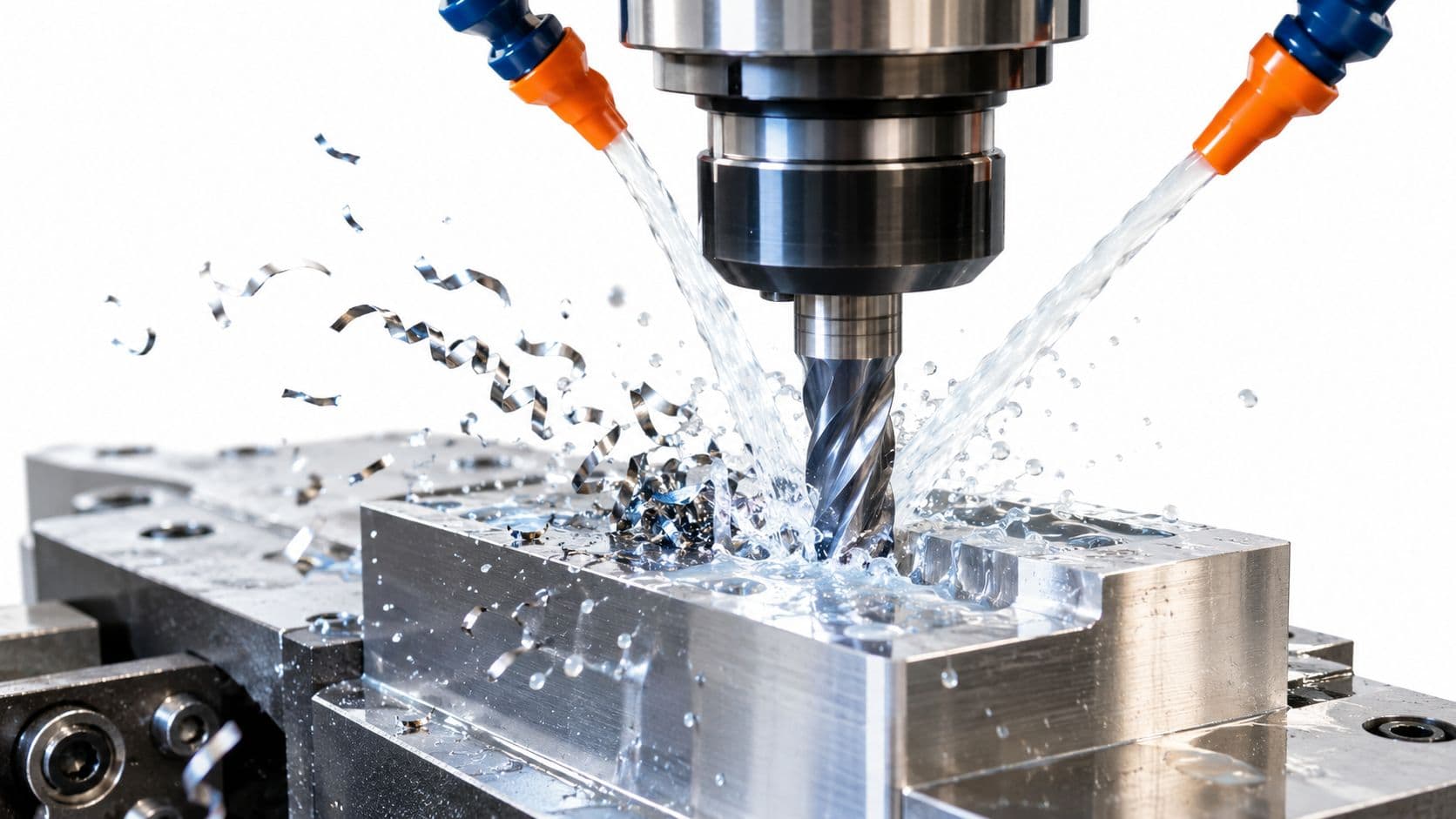
For ABS, use sharp tooling, rigid workholding, and conservative finishing passes around thin walls and bosses. The material's stiffness makes it easier to hold a reference surface while milling pockets, mounting faces, or enclosure halves. It also gives industrial designers more freedom to refine a visible surface after machining.
PP needs more attention to clamping pressure and heat management. Excessive tool pressure can distort the part, while poor feeds can produce stringy chips and a smeared surface. The machinist should support thin features close to the cutting zone and verify dimensions after the part has relaxed.
For a deeper process overview, see CNC machining for plastic parts. The right setup matters more than choosing the material that looks easier to cut.
FDM and powder-bed fusion
ABS remains common in FDM because it produces durable functional prototypes and can be post-processed for a smoother appearance. It also needs careful control of thermal gradients, since warping can pull corners upward or separate layers. An enclosed machine and a stable build environment improve repeatability.
True PP is difficult for typical desktop FDM printing because the material's shrinkage and warping behavior can undermine bed adhesion and dimensional accuracy. Powder-bed fusion is a better fit for many PP prototypes because the surrounding powder supports complex geometry and manages the thermal demands more effectively. Polypropylene 3D printing guidance identifies powder-bed fusion as a practical route for true PP parts, especially where chemical resistance and flexing matter.
PP is particularly useful for printed living hinges and compliant manifolds, but orientation, hinge thickness, weld-like layer behavior, and actual cycle loading still need validation. A printed hinge can demonstrate the concept, but it shouldn't be treated as proof that an injection-molded hinge will behave identically.
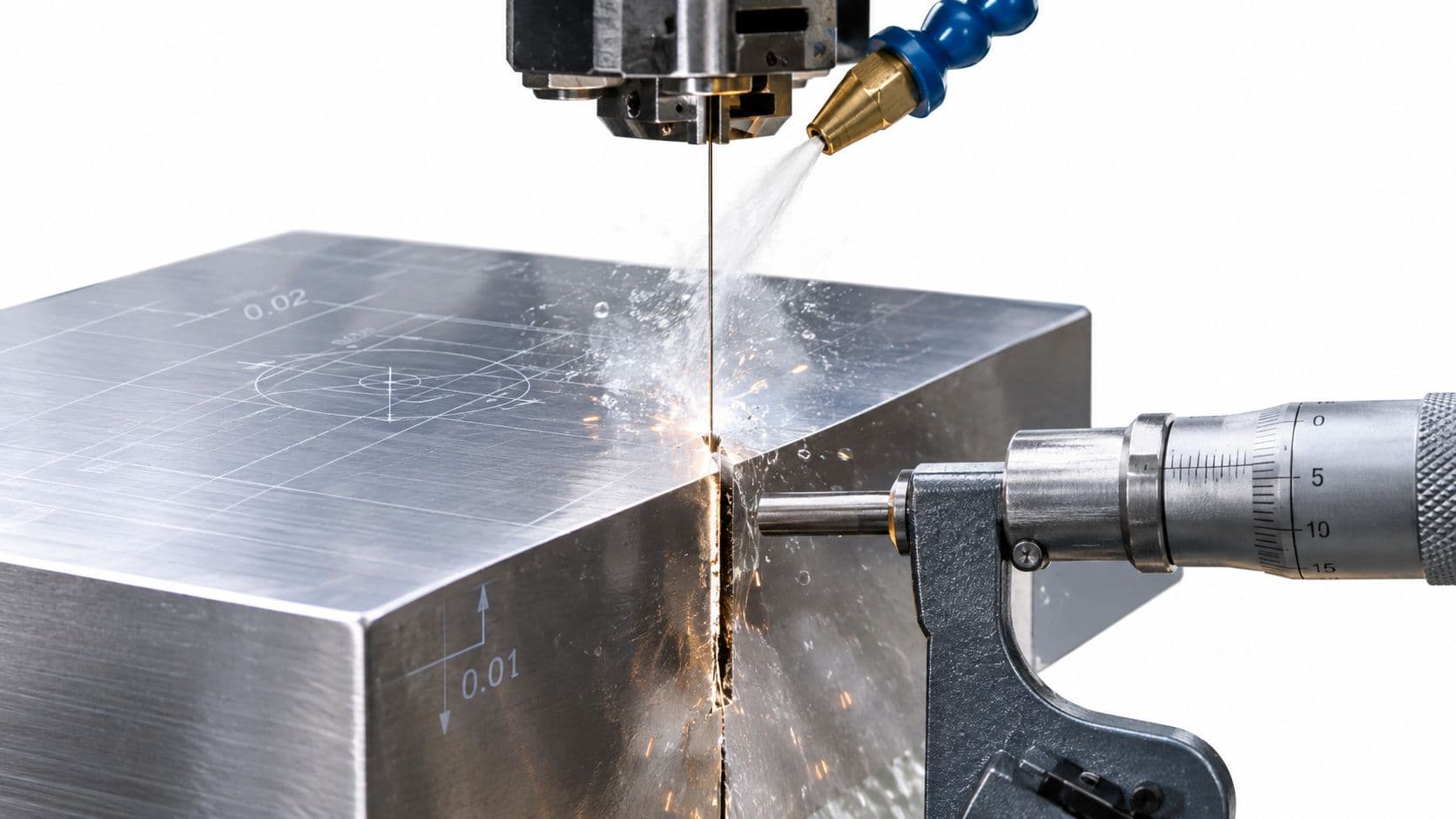
For a FIRMFG build, an ABS CNC verification block suits a cosmetic electronics housing, while an SLS PP fluid manifold is more informative for a flexible chemical-contact design. The process should reproduce the behavior you need to measure, not merely produce a part with the right outside dimensions.
Injection Molding and Vacuum Casting Behavior
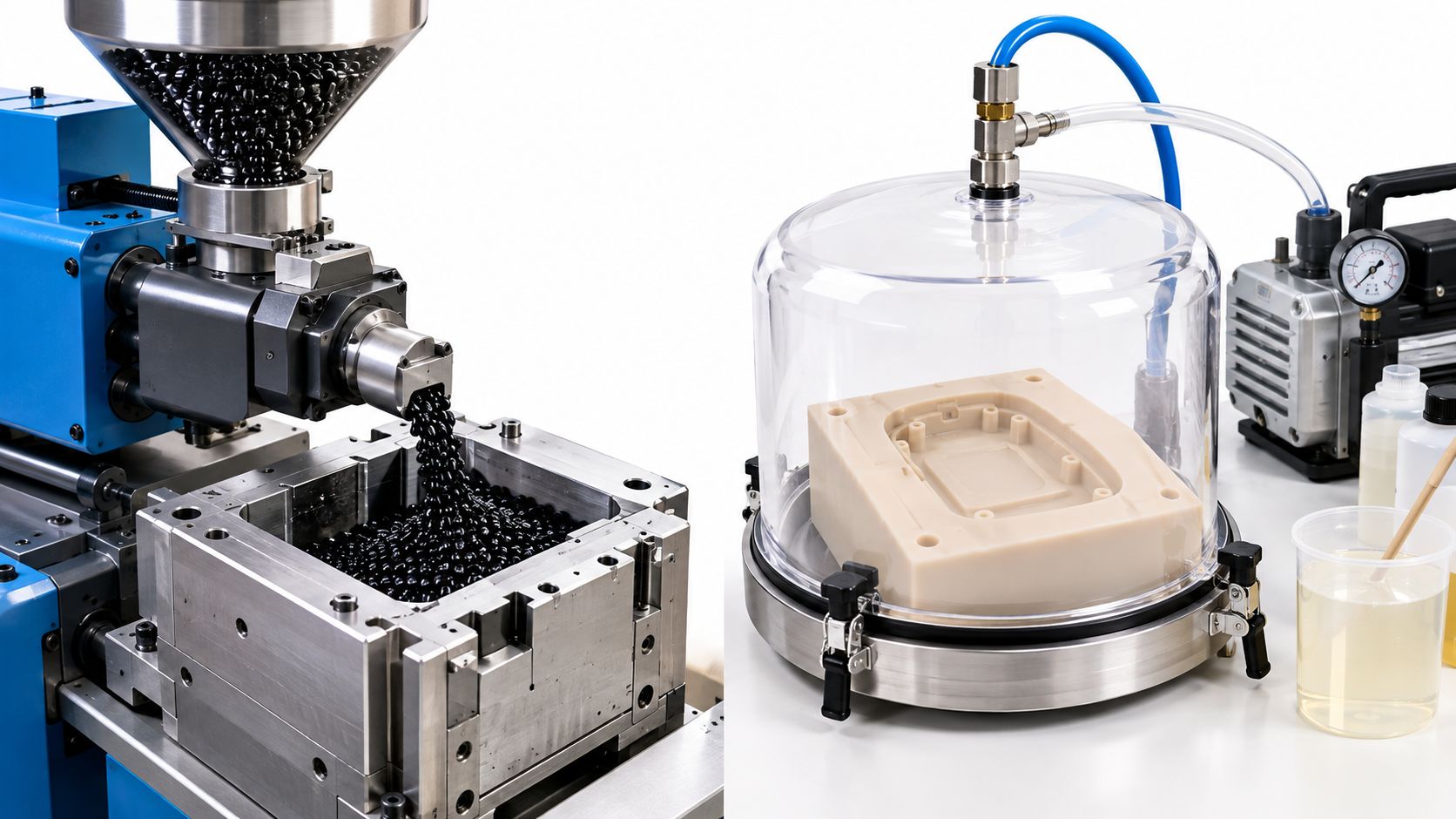
Injection molding makes the ABS versus PP decision more consequential because material behavior becomes part of the tooling design. ABS, as an amorphous resin, generally offers more uniform and predictable shrinkage. That helps teams manage tight fits, visible edges, bosses, and interlocking components.
PP is semi-crystalline, so shrinkage is higher and more directionally sensitive. Large flat panels are especially vulnerable to warpage if the tool layout, cooling balance, wall distribution, and process settings don't work together. The trade-off is valuable flow behavior, low part weight, and efficient production for high-volume designs.
Tooling and surface decisions
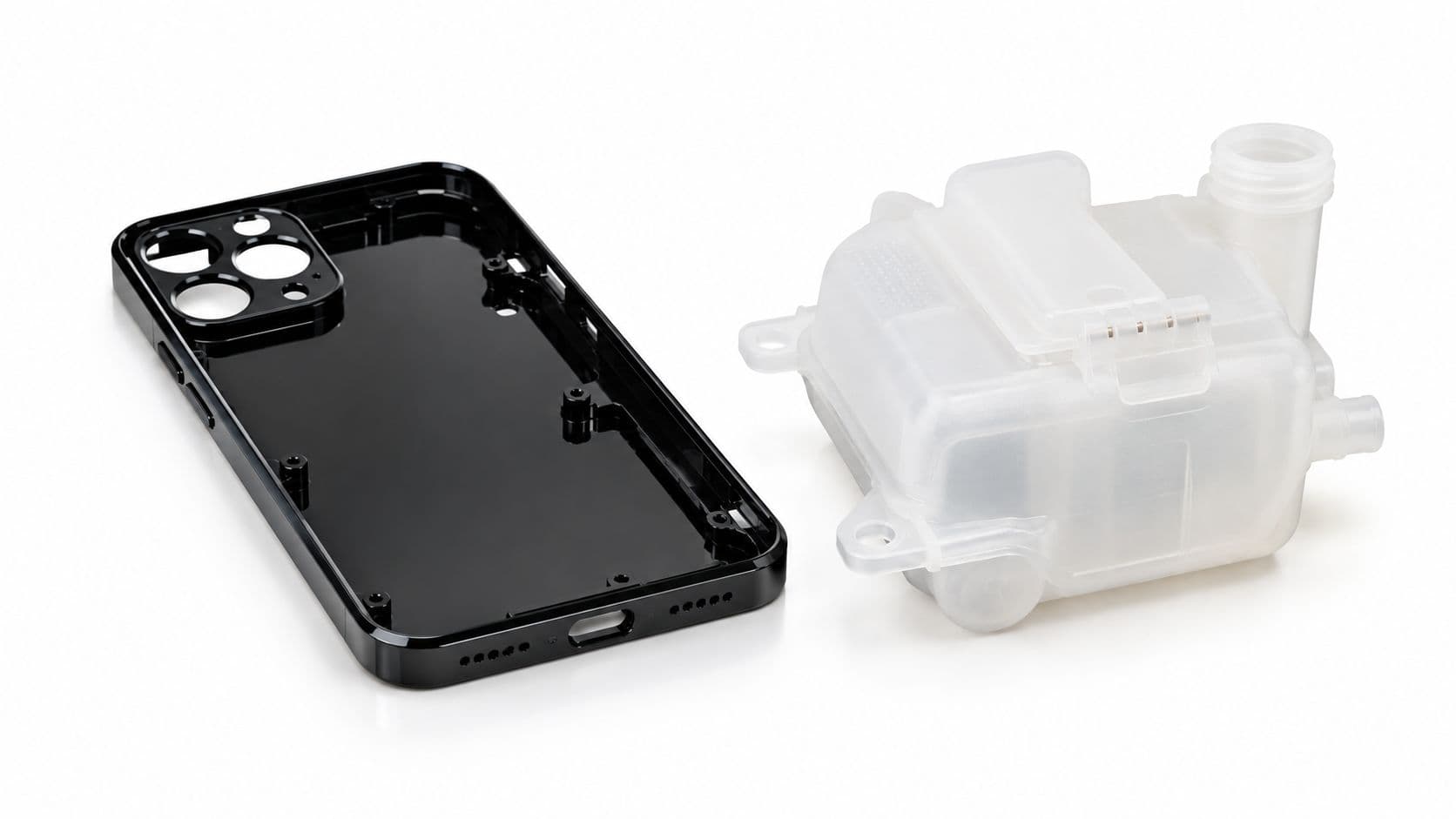
ABS usually makes the easier cosmetic choice. It can produce a smooth or glossy surface, accepts paint, and supports secondary operations that are difficult with PP. That makes it a strong candidate for consumer housings, dashboards, appliance fronts, and other visible parts.
PP often wins the production economics of a lightweight functional component. Its lower density reduces material mass per part, and its flow and cycle behavior can suit high-throughput molding. The mold still needs to account for shrinkage and warpage, particularly around ribs, holes, long cores, and broad cosmetic faces.
For an ABS-specific molding route, review ABS injection molding. The mold should be designed around the selected grade rather than assuming ABS and PP are interchangeable in an existing cavity.
Vacuum casting as a bridge
Vacuum casting uses silicone molds and polyurethane resins to replicate parts for appearance checks, assembly trials, and small-batch builds. ABS-like cast resin can approximate a rigid, paintable housing, while PP-like grades can represent a more flexible part. Neither substitute reproduces every production property, so use cast parts to evaluate the questions they can answer, such as fit, finish, ergonomics, and assembly.
A cast PP-like part won't prove the fatigue life of an injection-molded PP hinge. A cast ABS-like part won't fully validate production shrinkage or weld-line strength. The value comes from matching the prototype process to the specific design question.
Best Applications for ABS and PP by Industry
The most reliable recommendations start with the part's job, not its industry label. An automotive component, medical device, or consumer product can use either resin if the load history and environment support it.
Rigid housings and visible trim
ABS usually wins for electronics enclosures, appliance covers, instrument panels, and automotive interior trim. These parts need a firm feel, controlled interfaces, resistance to ordinary handling impacts, and a finish that can move from prototype to production without a complete cosmetic redesign.
ABS also suits toys and functional covers where color, gloss, paintability, and molding detail matter. A PP cover may survive impact, but its flexibility and waxier surface can make it harder to achieve the intended tactile and visual result.
Snap-fits need a more careful split. ABS is useful when the hook must remain rigid and the assembly needs a defined engagement force. PP is the better candidate when the snap feature is designed to flex repeatedly and recover without cracking.
Fluid-contact and chemically exposed parts
PP generally takes the lead for fluid reservoirs, chemical tanks, pump components, laboratory containers, and dishwasher-exposed consumer goods. Chemical resistance and moisture tolerance can matter more than stiffness, particularly when the part contacts cleaning agents, acids, bases, or process fluids.
Battery-related parts require a detailed review rather than an automatic PP selection. PP can be attractive for chemical resistance and compliant features, but the enclosure may need greater rigidity, dimensional control, or a more stable interface with seals and fasteners. In such a design, the correct answer may be a PP internal vessel with a separate rigid cover.
Hinges, clips, and repeated motion
Living hinges are the clearest PP application. The design intentionally concentrates bending into a thin, controlled section, and PP's fatigue behavior supports that architecture. ABS generally belongs in the surrounding rigid structure, not in the hinge itself.
The same reasoning applies to pump tabs, dispensing closures, flexible clips, and repeatedly opened lids. If the part spends its life flexing, choose a grade and geometry that tolerate cyclic strain. If it spends its life holding alignment, protecting electronics, or presenting a cosmetic face, ABS usually deserves the first evaluation.
DFM Recommendations When You Pick ABS or PP
Material selection becomes expensive when the CAD model ignores resin behavior. The designer should review wall distribution, draft, ribs, bosses, gates, weld lines, and assembly method before releasing tooling.
ABS design checks
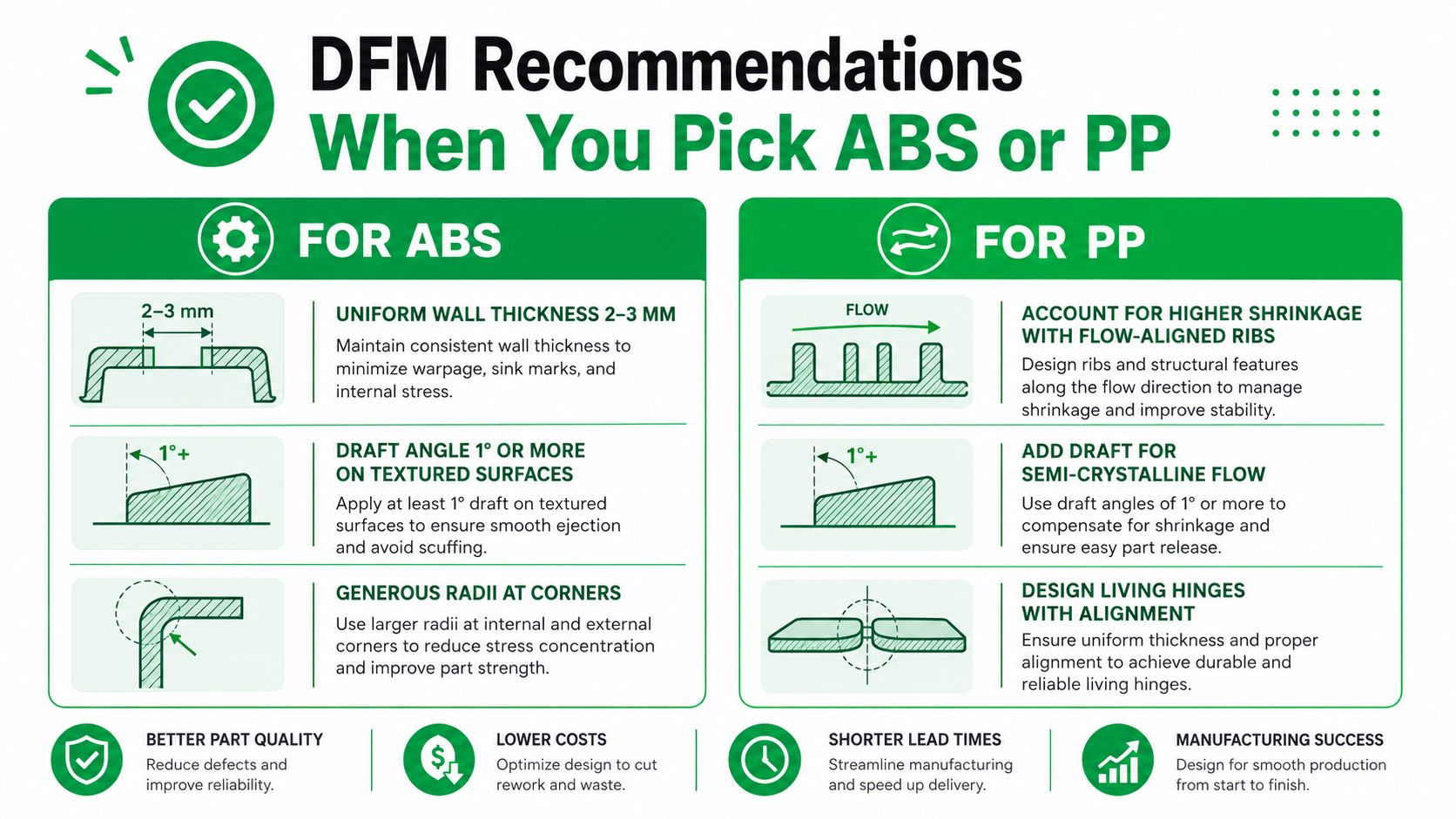
Use uniform wall thickness around 2 to 3 mm where the design allows it. Sudden changes create uneven cooling and can produce sink, distortion, or visible flow transitions. Keep heavy bosses tied into walls with ribs rather than creating isolated masses.
Textured surfaces generally need at least 1° of draft, with more draft often helping when the texture is deep or the core is tall. Put gates where weld lines won't cross critical snap hooks, screw bosses, or cosmetic faces. ABS handles solvent welding well and accepts many finishing routes, but the joint design still needs adequate bond area.
Pay attention to corner radii. Sharp internal corners concentrate stress and make the tool harder to polish, while generous radii improve filling and reduce local stress.
PP design checks
PP needs more room for shrinkage and flow variation. A practical starting point is 2 to 4 mm wall thickness, followed by simulation or molding trials for the actual grade and geometry. Long cores commonly benefit from 1.5° to 2° of draft, especially where the part must release without dragging or distortion.
Design ribs so they support stiffness without creating thick isolated sections. Align flow with long flexing features where possible, and avoid placing a weld line at the root of a hinge or compliant clip. Glass-filled PP can raise stiffness, but it also changes shrinkage, surface appearance, and anisotropy, so it requires its own design review.
The weaker material on a tensile chart can be the more durable material in a flexing design. Existing comparisons often miss this because they rank stiffness and chemical resistance separately instead of examining the complete load history, as discussed in this failure-mode comparison of ABS and PP.
Insert molding and overmolding add another decision layer. ABS bonds chemically with TPE, while PP bonds chemically only with SEBS, so the substrate and elastomer must be specified together. For a broader checklist, use DFM guidance for injection molding before freezing the tool design.
Choosing a Material and Process for Your Next Build
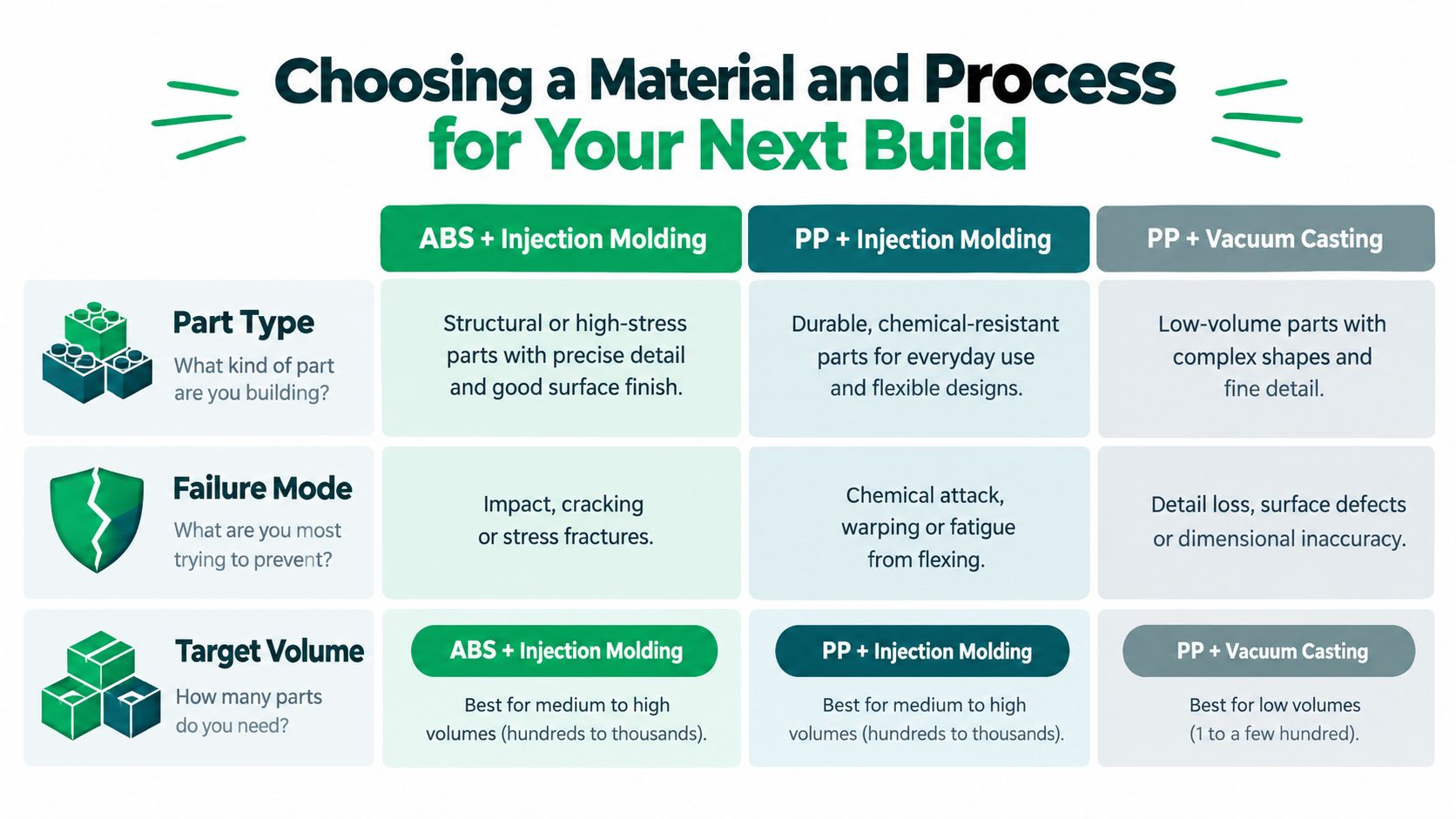
A useful decision matrix has three columns: what the part is, how it is likely to fail, and how many parts the program needs. That keeps material selection connected to process capability instead of treating resin as an isolated specification.
| Part and build need | Dominant failure mode | Starting recommendation |
|---|---|---|
| Visual prototype for a rigid housing | Surface quality, fit, and dimensional control | CNC-machined ABS or vacuum-cast ABS-like resin |
| Functional prototype with repeated flexing | Hinge or clip fatigue, chemical exposure | SLS PP or another validated PP prototype route |
| Pilot run for a cosmetic enclosure | Impact, stiffness, appearance | Rapid-injection-molded ABS |
| Pilot run for a fluid-contact component | Chemical exposure, flexing, weight | Rapid-injection-molded PP |
| Production part with a rigid visible shell | Dimensional and cosmetic failure | Production-molded ABS |
| Production part with a flexible or fluid-contact body | Fatigue and chemical failure | Production-molded PP |
The volume bands should be treated as planning categories, not universal rules. A low-volume housing may justify CNC machining when the team needs immediate dimensional feedback. A flexible component may need SLS PP even when a cheaper cast prototype would look acceptable, because the prototype must reveal whether the hinge or clip architecture survives its intended motion.
Make the prototype answer one question
For an appearance review, prioritize surface finish, parting lines, texture, and assembly fit. ABS machining or an ABS-like cast resin can provide useful evidence. For a flexing component, test the hinge thickness, orientation, weld-line location, and temperature exposure with a process and grade that resemble production PP.
For injection molding, run a material-specific DFM review before cutting steel. ABS and PP can share broad molding equipment, but they don't share the same shrinkage, cooling, release, or cosmetic assumptions. A mold designed around one resin may require substantial changes before it can produce the other consistently.
Shortlist both materials only after identifying the dominant failure mode. Then select the process that can meet the required tolerance, finish, flex behavior, chemical exposure, and schedule. FIRMFG offers CNC machining, SLS and FDM 3D printing, injection molding, and vacuum casting for prototype and low-volume workflows, so teams can evaluate ABS and PP without forcing the resin choice to follow an unsuitable process.
Share your CAD files, target volume, and service conditions with FIRMFG for a material and process review focused on the actual failure mode. Ask for an ABS and PP comparison that covers prototype method, DFM risks, surface requirements, and the route to low-volume production.