Aluminium vs Galvanized Steel: Best Pick for CNC Parts
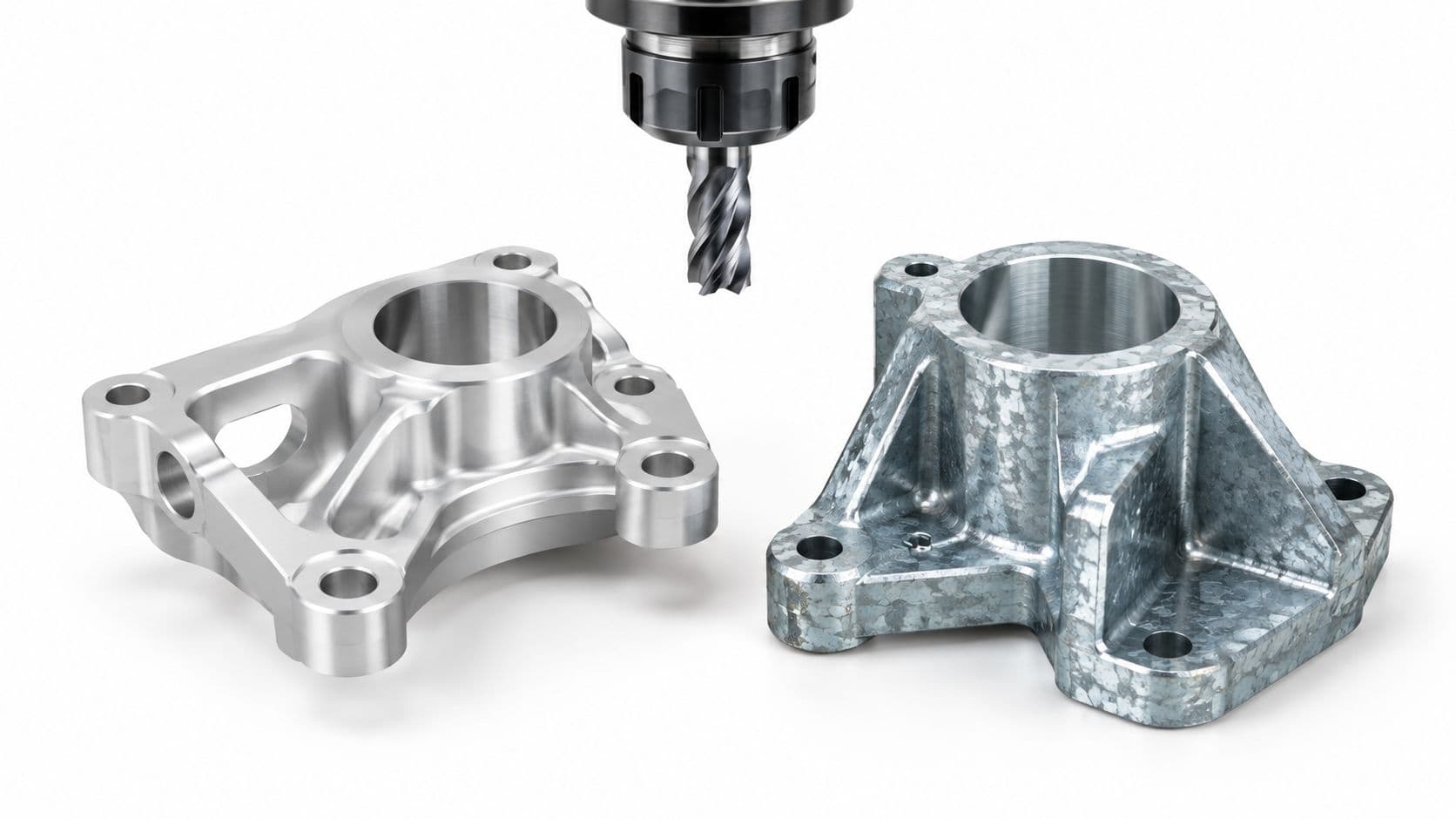
A surprising design truth shows up fast in the shop, aluminium isn't always the cheaper choice, and galvanized steel isn't always the tougher one. The right answer depends on what the part has to do after it leaves the machine, not just what the raw material costs on paper. For CNC parts, brackets, and enclosures, the wrong pick usually shows up later as deflection, corrosion at cut edges, heat problems, or a redesign that costs more than the first part ever did.
| Decision factor | Aluminium | Galvanized steel |
|---|---|---|
| Weight | Much lower mass for the same volume, roughly 65% less than steel by volume (Craftsmen Industries) | Heavier, but the extra mass often brings useful stiffness |
| Stiffness | Lower elastic modulus, often needs thicker sections or ribs (Xometry) | Higher stiffness per unit volume |
| Corrosion approach | Naturally forming oxide layer | Zinc coating with sacrificial and barrier protection (Galvanizeit) |
| Heat transfer | Better for thermally active parts (Xometry) | Lower thermal conductivity |
| Lifecycle fit | Stronger fit where weight, heat, or maintenance access matter | Often strong in mild environments with compact, load-bearing parts |
Table of Contents
Corrosion Protection Mechanisms and Service Life in Different Environments- Why zinc and oxide do not age the same way
Thermal Management and Heat Dissipation Performance- When heat flow changes the material choice
High-Temperature Behavior and Fire Resistance Considerations- Why elevated temperature changes the design brief
Fabrication, Machining, and Surface Finishing Workflow Differences- How the workflow usually diverges
How to Choose the Right Material for Your Next Prototyping Project- A practical selection checklist
The Weight-to-Stiffness Trade-off That Defines Material Selection
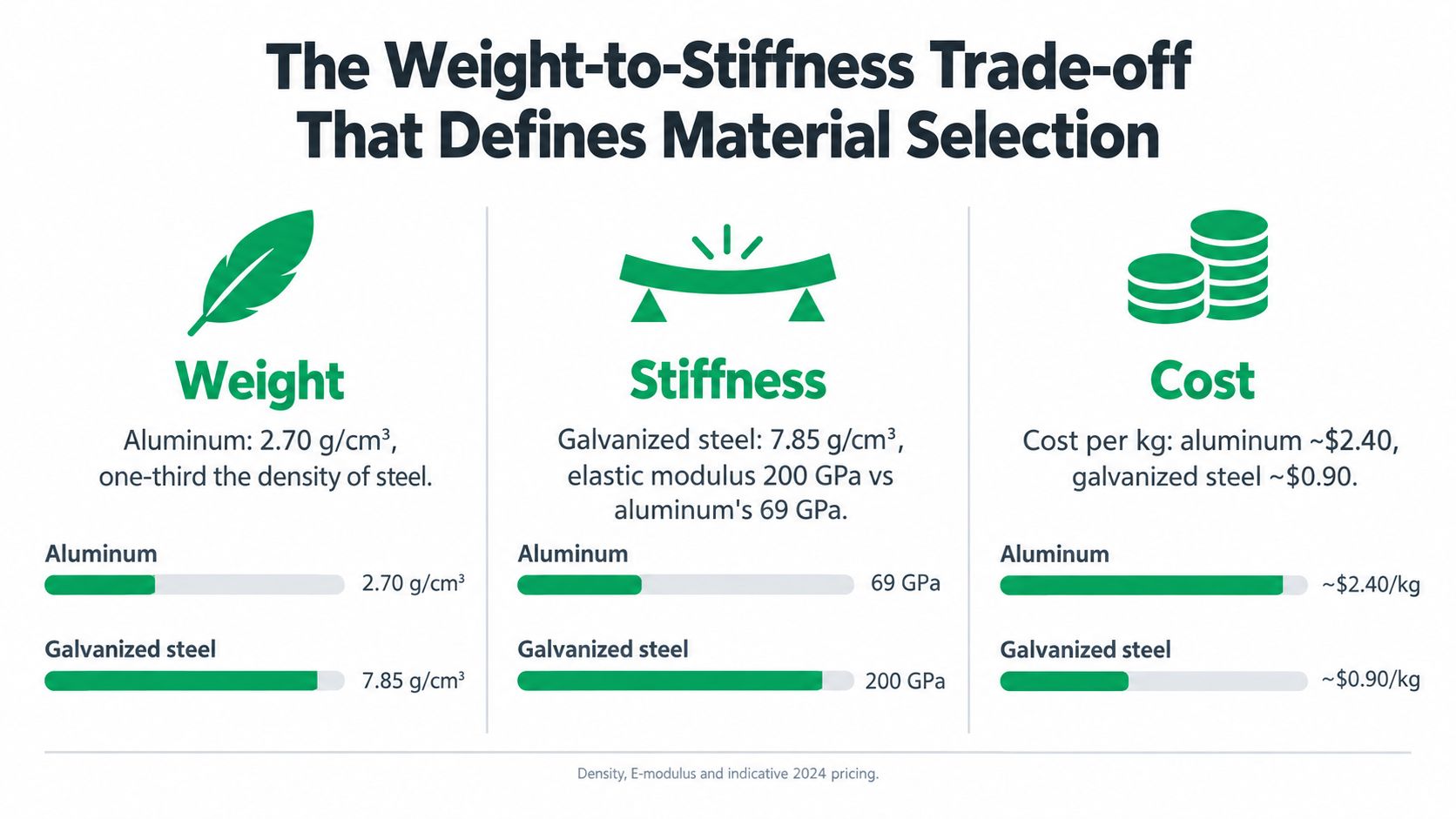
Teams often call for lightweight parts and then assume they also need high stiffness. Those are separate decisions. Aluminium has a density of about 2.7 g/cm³, while carbon steel is about 7.85 g/cm³, so an aluminium part with the same volume weighs roughly 65% less than a steel one (Craftsmen Industries). That weight drop matters in portable hardware, robot arms, aerospace brackets, and enclosures that get carried, shipped, or installed repeatedly.
Weight is only half the equation
Stiffness often decides whether the part works. Carbon steel's elastic modulus is about 200 GPa, while aluminium's is about 69 GPa (MatWeb, MatWeb). In practice, a direct thickness swap usually fails if the part must resist bending, vibration, or clamp load. Aluminium often needs thicker walls, ribs, gussets, or a different alloy to recover stiffness, and that trade-off is acceptable when mass or handling ease carries more weight in the design.
The load path matters more than the headline material property. If the part has to stay rigid in a tight envelope, galvanized steel usually gives the cleaner stiffness package. If the part has to move efficiently, ship cheaply, or shed heat during use, aluminium can still be the better choice even after the section grows.
Prototype teams get caught here all the time. A bracket that looks fine in CAD can deflect once fasteners, cable tension, and vibration enter the build. A CNC-machined aluminium fixture can be easier to handle on the bench, yet still need more section depth than the first sketch suggested. For that reason, I start by checking the geometry against real assembly loads and the process limits in CNC machining materials guidance, then I look at the material choice.
For low-volume work, the question is not which metal is stronger. It is which one gives the required stiffness, handling, and shipping profile with the fewest downstream compromises. The answer often changes once mounting hardware, service access, and how often the part moves between test stations enter the picture.
Corrosion Protection Mechanisms and Service Life in Different Environments
Galvanized steel and aluminium both resist corrosion, but they do so in different ways. Galvanizing adds a zinc coating to steel, so the base metal keeps its mechanical properties while the coating takes the exposure. Aluminium depends on a naturally forming oxide film that can reform after minor surface damage, which is why it holds up well in many atmospheric conditions without a separate coating (Galvanizeit).
Why zinc and oxide do not age the same way
Hot-dip galvanizing immerses fabricated steel in molten zinc at about 450°C. That coating gives barrier protection and cathodic protection, so the zinc corrodes first and can keep protecting exposed steel at scratches or cut edges.
Galvanizing has been engineered for corrosion protection since the 18th century.
The coating thickness matters more than the history. Thicker zinc coatings generally give longer service life, but the right target still depends on the exposure. A part that stays indoors, a bracket that sees weather, and a component in coastal spray do not age at the same rate, even if they start with the same base steel.
Aluminium's oxide layer works differently. It is self-forming and stable, but it does not behave like zinc in every environment. Chloride-rich conditions, marine service, chemical exposure, and dissimilar-metal contact all need a real check, not a generic corrosion-resistant label.
Design note: cut edges, drilled holes, and fastener interfaces deserve as much attention as flat surfaces. On galvanized parts, those areas are where the coating gets interrupted. On aluminium parts, those are often the first places to expose galvanic issues if the assembly mixes metals.
For mild inland conditions, galvanized steel can be an economical choice. In harsher chloride-rich settings, zinc consumption accelerates, and maintenance, touch-up, or replacement starts to matter sooner. That is why corrosion-resistant finishing options should be chosen alongside the base metal, not after the prototype is already signed off.
The decision is exposure control. If the part will sit outdoors, see spray, or share fasteners with other metals, service life is set by the joint details as much as by the alloy itself.
Thermal Management and Heat Dissipation Performance
Heat flow often decides the material before weight does. Aluminium moves heat far better than galvanized steel, which makes it the stronger choice for heat sinks, motor housings, LED enclosures, and battery-adjacent brackets. A 6061 aluminium alloy datasheet lists thermal conductivity in the same high range commonly used for design work, while steel remains much lower by comparison (MatWeb). Xometry's general aluminum-versus-steel comparison points in the same direction, but the thermal-property choice should rest on a proper material datasheet, not a broad material overview (Xometry).
When heat flow changes the material choice
A housing that must spread heat is not just a structural part. In electronics, the enclosure may need to pull heat away from a hotspot while still holding connectors, standoffs, seals, and cable loads in place. Aluminium helps because it evens out local temperature peaks before they turn into hot spots around the mounted component.
Mass still matters. Aluminium is far lighter than steel, so the same external envelope can often be kept lighter even after wall thickness is adjusted for stiffness. That is useful for portable electronics, mobile robotics, and battery-mounted hardware, where extra mass affects handling, support loads, and the strain on mounting points.
| Thermal property | Aluminium | Galvanized Steel |
|---|---|---|
| Thermal conductivity | High, typically around the 200 W/m·K range in common engineering alloys (MatWeb) | Much lower, around the 50 to 60 W/m·K range in the cited comparison (Xometry) |
The trap is treating good heat flow as a substitute for rigidity. It is not. If an aluminium bracket carries a fan, PCB, or heatsink assembly, deflection, vibration, and fastener pull-out still need to be checked. I have seen teams choose aluminium for thermal reasons, then discover they needed ribs, a thicker gauge, or a different mounting layout to keep the assembly stable under real use.
Thermal parts should be evaluated as a system. Material, wall thickness, fastening pattern, and airflow all interact, and the right choice is the one that controls temperature without creating a flex problem at the joint.
High-Temperature Behavior and Fire Resistance Considerations
Room-temperature strength data can hide a lot of risk. In parts that sit near motors, heaters, batteries, or process equipment, temperature changes the answer before load does. One comparative source reports representative fire-resistance performance of about 0.75 hours for aluminium versus 3.5 hours for steel in the cited comparison, which is a wide enough gap to matter in safety-critical equipment (BMS PDF).
Why elevated temperature changes the design brief
Aluminium's low mass is useful, but its strength and stiffness fall substantially as temperature rises. That means a room-temperature tensile result can mislead you if the enclosure sits near an inverter, battery module, or furnace-adjacent station. A part that looks acceptable on a bench test may deform earlier than expected once local temperatures climb.
Bottom line: if the part can get hot, temperature is part of the load case. The material choice is incomplete until you know the maximum service temperature, required fire rating, and whether insulation or intumescent protection is allowed.
Galvanized steel brings a different set of concerns. The zinc coating protects against atmospheric corrosion, but it doesn't remove the need to think about the underlying steel's behavior under heat, weld zones, and thermal expansion. At high temperatures, the steel substrate is still the structure doing the work, so joint design and section size remain critical.
For robotics, automotive, electronics, and medical-device enclosures, this often changes the preferred material. A lightweight aluminium housing may still be right, but only after the thermal boundary conditions are known. If the part is close to a battery pack, brake system, sterilization cycle, or combustion source, the safer choice can be the heavier one because compact stiffness and fire performance matter more than easy handling.
A good prototype review here asks three questions. What temperature does the part see? What happens to the joint and heat-affected zone? What protection strategy is available if the material softens or the surface is exposed to flame? Those questions prevent the common mistake of treating all enclosure parts like they live at room temperature.
Fabrication, Machining, and Surface Finishing Workflow Differences
The machining choice changes more than the part. It changes fixturing, tool life, finishing, weld prep, and how many process steps the job needs before it ships. Aluminium is generally easier to machine and form, while galvanized steel brings coating-related constraints that affect timing and sequencing, especially in short-run work.
How the workflow usually diverges
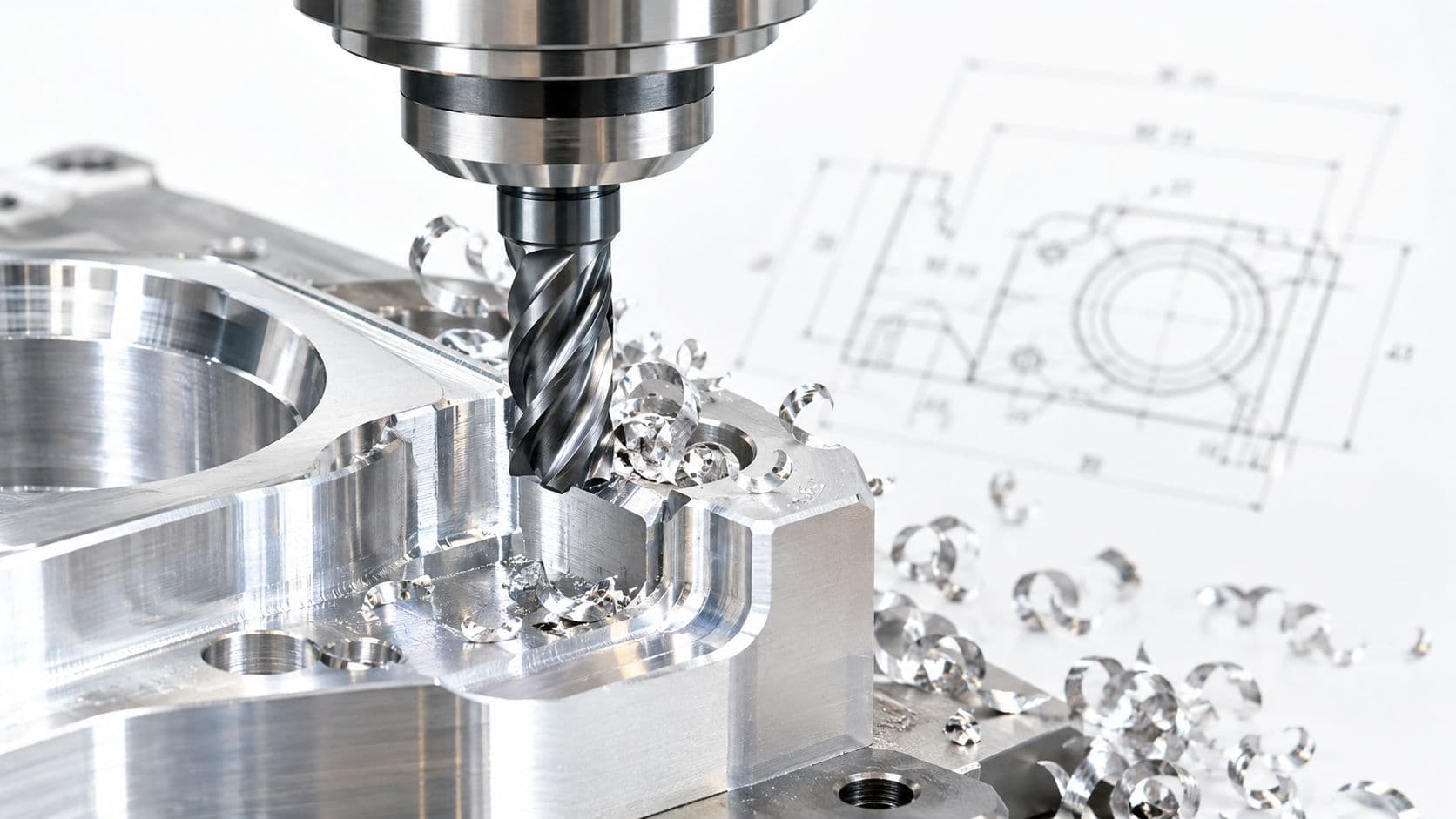
With aluminium, CNC cutting is usually straightforward, chips clear cleanly, and parts are easier to deburr, anodize, bead blast, or powder coat afterward depending on the target finish. Aluminium is also common in CNC machining aluminum workflows because it supports fast iteration when geometry is still changing.
Galvanized steel is different. The zinc layer is there for corrosion protection, but that same layer can create issues during machining and welding, so many teams machine the part before galvanizing. If the coating is already on the part, you have to manage fumes, coating damage, and post-process touch-up carefully. The coating is doing useful work, but it also narrows your process window.
Practical advice: don't let finish selection happen after fabrication. If the part needs welding, decide whether it will be welded before or after coating, because that choice affects fumes, corrosion repair, and dimensional control.
A simple workflow comparison helps.
| Fabrication Process Compatibility | Aluminium | Galvanized Steel |
|---|---|---|
| CNC machining | Easy to machine and deburr | Better to machine before galvanizing when possible |
| Welding | Common, with alloy and temper considerations | Requires coating awareness and post-weld corrosion repair |
| Surface finishing | Anodizing, bead blasting, powder coating, decorative finishes | Zinc coating is the corrosion system, with touch-up where needed |
| Dimensional control | Generally easier to hold tight tolerances | Coating thickness can complicate tight fits |
Low-volume production can get expensive if the first prototype was chosen only for cost per kilogram. A part that looks fine before finishing may become difficult to coat, weld, or inspect after design changes. For some teams, a manufacturing partner that can keep machining and finishing under one roof reduces that risk. FIRMFG is one option for CNC prototyping and short-run fabrication when the job needs both metal processing and finishing control.
The best workflow is the one that avoids re-clamping, re-welding, and re-coating just to fix a design assumption that should've been checked at the start.
How to Choose the Right Material for Your Next Prototyping Project
The right choice between aluminium and galvanized steel comes from a simple order of decisions. Start with exposure, then load path, then temperature, then finishing. Reverse that sequence and you often optimize the wrong variable, then pay for it during assembly or field testing.
A practical selection checklist
- Environment first: indoor, inland outdoor, coastal, splash-prone, or chemical exposure. Galvanized steel holds up well in mild inland air. As chloride exposure rises, aluminium's self-renewing oxide becomes the lower-maintenance choice.
- Life cycle second: look past purchase price. Rapid Protos notes that galvanized steel can be the economical choice in mild inland conditions, while aluminium can deliver lower lifecycle cost in chloride-rich coastal or marine environments because maintenance and replacement risk shift the equation.
- Mechanical behavior third: if compact stiffness and load-bearing capacity dominate, galvanized steel usually stays in the running. If weight reduction, portability, or easier handling matters more, aluminium usually deserves the first pass.
- Temperature and fire next: if the part sits near heat sources, do not rely on room-temperature numbers. High-temperature and fire requirements can overturn the initial pick.
- Fabrication reality last: welding, coating repair, tight tolerances, and fastener access all affect the final cost. The cheapest raw material can become the most expensive part if the process chain is awkward.
Good prototype rule: pick the material that lets you validate the actual product, not the cheapest version of the CAD file. If corrosion access, coating repair, or thermal limits are untested, the prototype is incomplete.
For low-volume CNC parts, I would use aluminium when the design is mass-sensitive, thermally active, or likely to change during iteration. I would use galvanized steel when the part needs compact stiffness, tough handling, and solid corrosion protection in a controlled exposure class. The answer is not universal, and that is the point.
If you are specifying brackets, enclosures, or thermally active hardware for a prototype or short run, FIRMFG can machine, finish, and coordinate the build around those material trade-offs. Visit FIRMFG to review CNC prototyping and short-run manufacturing options that match the load, environment, and finish requirements of your part.